















“Delete all my data”: what to do when a GDPR deletion request lands
We’ve all read about GDPR and most founders I know live in fear of the same thing: one day a customer emails sayin...


Already have an account? Log in
At SeedLegals we occasionally get contacted by founders asking for super-voting shares. Presumably they’ve seen that Mark Zuckerberg has super-voting shares and they want that for themselves. If super-voting shares give you godlike status and mean you can’t be fired, of course, you’d want that for yourself.
But what’s fine for someone who’s created a multi-hundred-billion-dollar public company is a sure way to make your startup uninvestable. And it’s not needed because at the start the founders you have most of the shares anyway.
So, time for an article on how company governments really works.
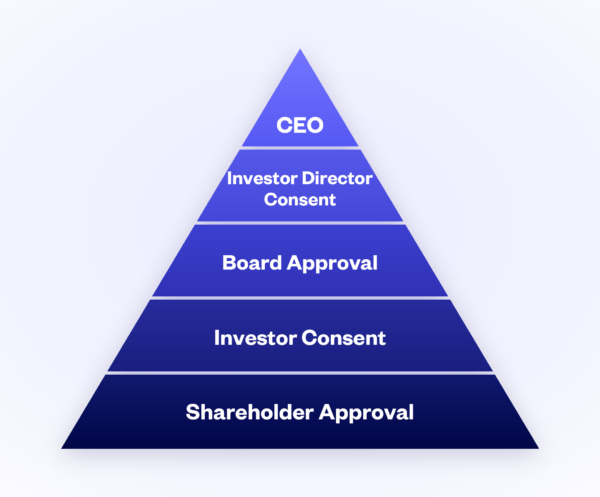
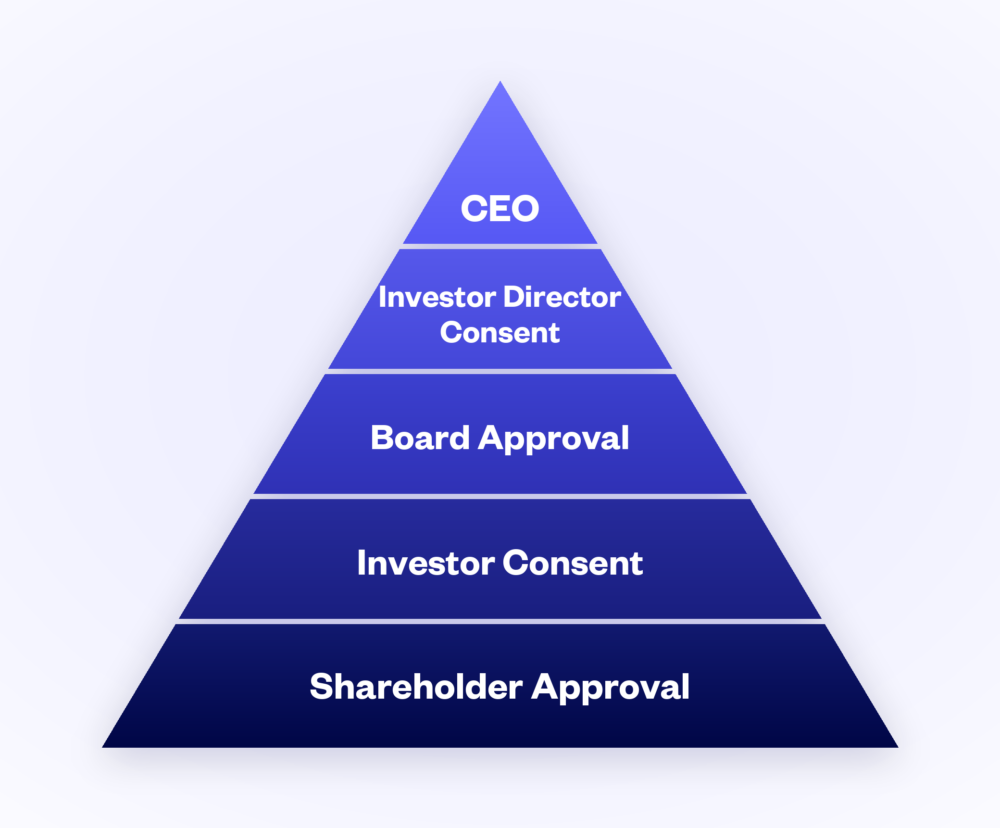
You can think of company governance – the approvals you need to run your company – like a pyramid, with the CEO at the top and the shareholders at the bottom.
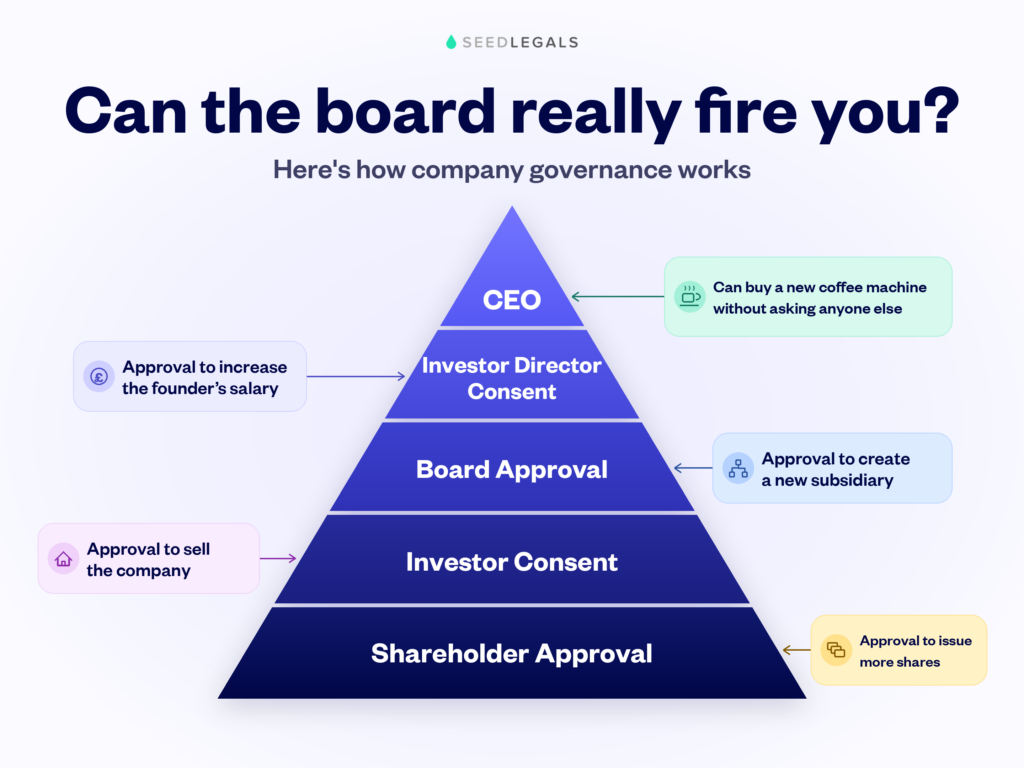
As the CEO at SeedLegals, I can happily buy a new coffee machine. I don’t need to ask anyone. I have the authority to go ahead and do it!
But for larger decisions like creating a new subsidiary or spending money outside the approved budget, I need to go to the board. I can’t just make that decision myself.
Company boards have many roles and responsibilities, but one of them is the shared risk-reward for larger decisions, instead of the founders or one founder just making major decisions themselves.
By going to the board, you get collective thinking on big-picture decisions. Importantly for a founder, if things go wrong, you’re not sitting out there alone with the blame pointing at you, it’s a board decision.
When you do a funding round, the Shareholders Agreement will typically list a set of matters that need board approval. For example, creating a subsidiary or hiring somebody above a certain pay level will typically require board approval.
If you’ve raised money from a VC, typically they’ll want to have a director on the board, who they appoint, that’s known as an Investor Director.
And some board decisions, they’re going to insist have Investor Director approval needed as well. For example, the founders paying themselves a higher salary. If the founders control the board, they can vote themselves anything they want, so the investors will ask for an Investor Director consent right so that they have an approval regardless of whether the founders control the board.
Going down a level from that, big decisions that affect the investors will often require investor majority consent. For example, if you decide to sell the company and your last funding round had investor majority consent provisions, then you’ll need, typically, 50% of the investors by number of shares held to agree to that before you can go ahead and do it.
Investor consent is designed to protect the investors from scenarios like the founders selling the company at a low valuation which makes the founders millionaires but has the investors lose money on their investment. Were just board consent and shareholder approval to be needed, the founders might be able to swing that just by themselves, and so this additional investor consent right exists for a small number of key company decisions.
And then, lastly, at the bottom of the pyramid, there’s shareholder approval. This is where some decisions need the vote of a majority of the shareholders by a number of voting shares held. Some decisions, like issuing more shares, need a simple majority vote, which is 50% of the number of shareholders by number of voting shares held.
Other decisions, usually waiving preemption (which means some people can get shares without other people having a preemption right), need 75% shareholder approval.
So now, back to the question: Can the board get you fired, and how do you prevent it?
The answer is that, yes, the board can get you fired. If the majority of the board vote against you, you’re in trouble.
How do you prevent it?
Well, it’s really, really important that the founders control the board. This means if they’re two founders, there should be no more than four directors on the board, with the founders (or one of the founders) having a controlling vote in the case of a deadlock (which usually means one of the founders is the chairperson).
If the investors on the board outnumber the founders, then the founders are at risk of the investors getting together and getting them fired.
Which takes us back to the core question here, which is: do founders need super-voting shares?
And the answer is that when you create your company, the founders have 100% of the shares. You get diluted at each funding round, maybe 15% each funding round, and after the third funding round, the founders should still have more than 50% of the shares (assuming they diluted 15% each round).
So you can see there’s no need for super-voting shares for the first few funding rounds because you have most of the shares anyway. The risk of being fired sits not with the shareholders but with the board, and it’s the board that you should be focused on controlling.
You might be thinking, “Sure, that’s all very well, but I should still give myself super-voting shares to protect myself in the future.” The answer is, you can do that, but any time investors see that founders are trying to pull one over the investors, well, investors get many, many incomings. If you add more friction compared to other companies coming their way, they’re just going to skip right past your company and go to the next one where they can focus on whether they like the business rather than the founders having created a complex legal structure that they will need to spend time getting them to unwind.

We’ve all read about GDPR and most founders I know live in fear of the same thing: one day a customer emails sayin...

Is the future of startup funding a milestone-based fundraising platform? At NYC's first VC hackathon, that's the idea my...

It’s a big founder dilemma, so here are the pros/cons of different billing models: Free during the beta period Y...