











The Adventures of Alice, Startup Superhero
Thinking of giving up your day job and doing your own startup? It’s a dauntingly huge step. Join Alice, startup su...


Already have an account? Log in
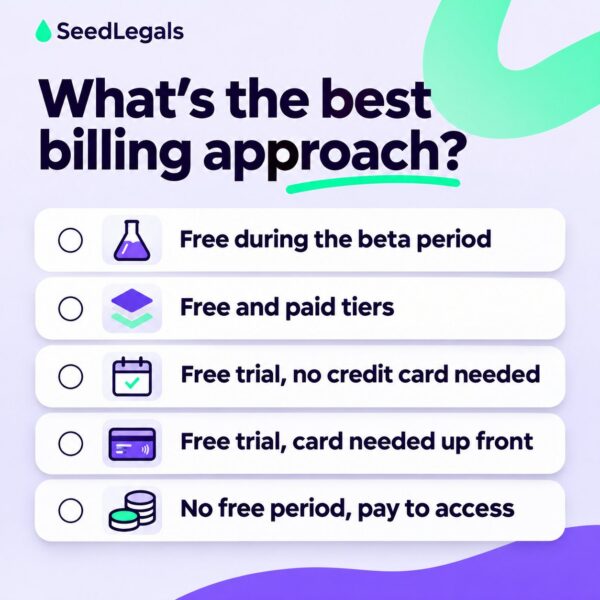
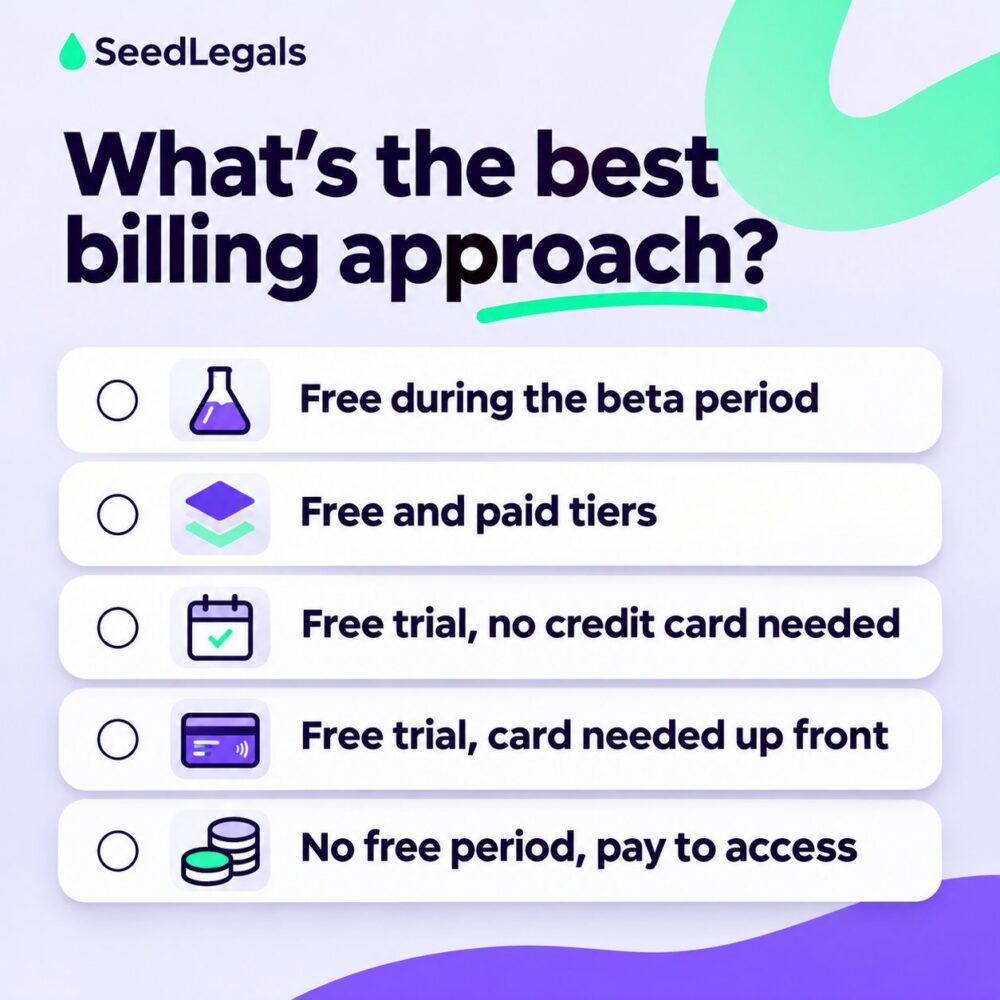
It’s a big founder dilemma, so here are the pros/cons of different billing models:
You’ve just launched the product. You’re embarrassed to bill for it.
Pro: Reduce friction, get the maximum number of signups. And if it doesn’t work no one’s going to blame you for taking their money.
Con: Sounds like a great idea but investors are going to grill you as to how you’re going to turn those free users into paying customers. They may hold on investing until you’ve switched to a paid model & proved that people will pay for the product.
The classic Free / Pro / Enterprise model.
Pro: Super easy for people to get started, no friction.
Con: Your problem will be coming up with a sufficiently differentiated product to avoid users staying on free forever. One of my favourite sites, Similarweb.com (analyse competitors’ web traffic), their free tier is pretty good, paid tier is insanely expensive. So I stay on the free plan, never switching to paid. Also, investors are going to grill you on this model and wait until you’ve got the upsell numbers before they’ll invest.
I’m a big fan of allowing people to try your service before you ask for their credit card so this is what we do at SeedLegals, there’s a 7-day free trial that gives unlimited access to many platform features.
Pro: No friction for people to get started.
Con: If your users are looking for a one-time action (PDFSplit is a good example) and can do that on the free trial, they may love your service but never sign up to the paid plan.
A common way to avoid the problem above is to require credit card details up front, promising the user that you’ll only start billing after 7 or 30 days. The onus is on the user to log in later to cancel the subscription, if they forget to do that, you start billing them.
Pro: Most people are going to forget to unsubscribe and will be billed as a result.
Con: It adds a barrier to trying out your product, particularly if you have competitors who don’t require a card up front. And your customer support team is going to have lots of unhappy customers who say they weren’t aware they were going to get billed later or forgot to unsubscribe in time.
If you’re so confident in your product that you can require people to enter their card details before they’ve even had a chance to try it then this is the brave way to go.
Pro: Avoids all the problems of free trials, you get to book revenue from day one.
Con: It’s a huge leap of faith for people to enter their card details before trying your service. It needs sufficient word of mouth out there that your service is so hot that people will pay without even trying it first.
It’s that last point above that got me to write this post because a founder asked me to try out their website. It asked for my card details before I could even complete the log in. But there are tens of thousands of AI-generated websites these days that all look so similar. They all offer such overlapping functionality that I don’t want to give someone my credit card details until I know that their service will be useful for me. So I bailed and wrote this post instead.
Look out for sites where the monthly subscription is really high compared to the annual, that indicates a product with a high churn rate or something that you only want for a one-time event but you’re being pushed to an annual subscription.
A great example of this is software for capturing leads at events. You’re exhibiting at an event. You want to let people enter their details on an iPad or tablet – way better than collecting business cards. There’s software for that. But the companies that make that software know that you only need it for a few days before and after the event. So they have an annual subscription that’s only 3 or 4 months’ worth of monthly in an attempt to upsell you to annual, even though you know you don’t really need it.
Thinking of giving up your day job and doing your own startup? It’s a dauntingly huge step. Join Alice, startup su...

At SeedLegals I keep getting asked by founders to give feedback on their pitch deck or their website. Until recently, I&...
There's a lot of debate right now about a proposed government ban on non-compete periods. A group of well-funded AI com...