













When should you start billing for your product? Free or paid? Free trial period?
It’s a big founder dilemma, so here are the pros/cons of different billing models: Free during the beta period Y...


Already have an account? Log in


Fundraising is broken. Founders have an idea and tell investors they’re raising £500k to fund the next 18 months. Investors wire their entire amount up front, without any idea of whether it’ll take off.
But founders don’t need £500k. If they had £50k a month, that would be awesome.
So founders struggle to raise because they’re asking for too much. And investors lose their investment by handing it all over up front, rather than funding validation and traction.
What if investors committed to a startup, but released the money in stages as the founder hits agreed milestones?
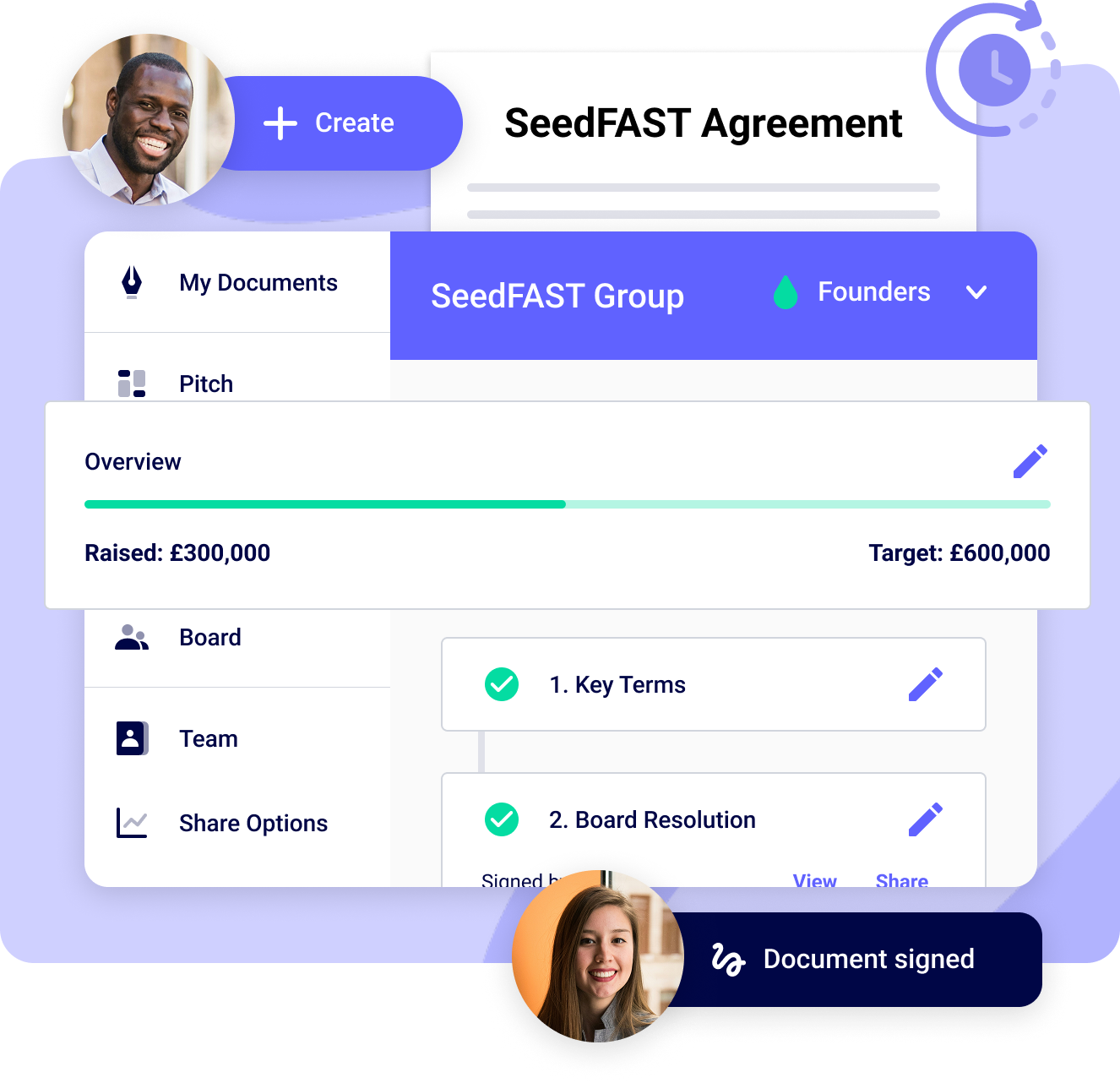
Welcome to Steadily, a milestone-based fundraising platform. And introducing the Steadily SeedFAST, which we boldly declared the world’s first milestone-based Advance Subscription Agreement.
Steadily isn’t a SeedLegals product. It’s a concept my team came up with at Deal Flow, NYC’s first VC hackathon, organised by the brilliant Somya Gupta. Thanks to Hunter Peress, Paula Bejarano, Femi Palmer and Shubh Khandhadia, who brainstormed and built it with me.
In the space of five hours, we came up with the concept, made a web page and built an actual working app. Well, mostly working.
I vibe coded the homepage in Lovable in a few minutes. Then one of my teammates gave that page to Codex and asked it to build the app behind it. A couple of hours later, we had a demo you could click through.
What struck me is that the building was the quick part. Not long ago, getting to a working demo meant weeks of a small team’s time. You’d spend those weeks convinced you were right, because you’d already invested so much in being right.
Now the code is cheap. The expensive part is finding out whether anyone wants the thing. So while Codex was building, I pitched the idea on LinkedIn. The post has been seen over 130,000 times and it started a lively debate about whether it could actually work.
There’s a lesson in that for founders too. If you can build a demo in an afternoon, so can everyone else. What’s hard to copy is evidence that people want it.
So here’s what we built, and what people made of it.
Tranched investment isn’t new, but it’s usually a one-off arrangement between one founder and one investor. Steadily aims to make it a standard way to raise, with a common framework for milestones, investment terms and reporting.
So an angel who’d normally write two £50k cheques a year could write ten £10k cheques instead, each one linked to how the company is actually doing. And a founder who keeps hearing “love what you’re doing, come back later” gets money now, with more to follow as they prove it.
At least, that’s the theory.
Steadily is still a hackathon idea, but you can already raise as you go with SeedLegals. Bring in investment as each investor is ready, using SeedFASTs, funding rounds and Instant Investment top-ups – with unlimited support from the SeedLegals funding team.
The comments split pretty quickly.
The sceptics. A much-liked comment from an early-stage investor was simply: “Hope it stays a joke.” His point was that raising should give founders enough certainty to build for 12–18 months, hire a team, and not worry about letting everyone go next month. A former VC agreed: drip-fed funding makes founders under-commit to hiring and get diluted just keeping the lights on.
Others questioned the milestones themselves. One founder building AI tools thought it might work for a physical product business, but not in AI, where the landscape shifts every three months and predicting six months out is near impossible.
And there were practical worries. Would investors actually follow through on later tranches? How would valuations work? And would founders drown in reporting and investor comms? One fund founder called it “founder hell”.
Honestly? That’s exactly what I’ve been saying about tranched funding for years. Earlier this year I made a video on why tranched rounds so often go wrong for founders. Milestones stop making sense as the business evolves, and if a tranche doesn’t arrive, you’re left living hand to mouth.
But maybe it’s possible to rethink it. A lot of those problems come from how tranching works today: one-off deals, vague milestones, and founders stuck doing the reporting. Imagine a portal where investors can see all their investments, and the milestones each one has reached, without founders having to chase anyone.
The believers (and the maybes). Not everyone needed convincing. One founder told me digital escrow, with money released milestone by milestone, has always been the future of funding. He’d even prototyped something similar back in 2012.
Others could see it working in the right circumstances. One fund founder thought it could suit the very first stage of funding, where a startup can do a lot with £50k and investors want some evidence of execution before backing a whole round. Another commenter thought it could work for physical product businesses setting up factory production. And even one of the sharper critics called it great in theory, saying it “would be a great instrument”.
Reading through the comments, here’s what I keep coming back to. Many of the same arguments were once made against instruments that let founders take investment before a funding round, like the SAFE in the US or the UK’s ASA (our version’s called SeedFAST). And now they’re the default way to raise.
Once upon a time, the only way to raise investment was a funding round. You get a whole bunch of investors together and agree a term sheet and all the deal terms. Then you wait for everyone to sign, and wait for everyone to send the funds.
At first, raising on an ASA was seen as a huge negative. It meant you couldn’t get enough investors together for a proper round. And if you wanted to raise £250k, would an investor ever give you £50k, or even £10k, on a SeedFAST? What good would that do you? You’d be living hand to mouth.
But then the world changed. ASAs let founders take money to build the startup now, and leave decisions about valuation until later. Instead of raising with one SeedFAST, founders raised with ten. Investors accepted that it was better to raise incrementally and faster than to wait for everyone to get on board.
So could tranched rounds go the same way? Right now, tranching usually signals an investor who lacks conviction. But if it’s positioned and productised differently, as a way for founders to raise faster from lots of investors in parallel, there might be something to it.
The Steadily SeedFAST even uses the same levers as a SeedFAST: a discount and a valuation cap. The difference is that they shift at each milestone. If you’re raising on SeedFASTs today, our guide to choosing your SeedFAST deal terms explains how those levers work.
Building a working version took an afternoon. The hard part is knowing whether founders and investors really want it.
In the meantime, you don’t need Steadily to raise in stages. Before you settle on a big number for your next raise, ask yourself whether you need all of it now, or just enough to reach your next proof point. Lots of founders already raise this way.
Raise as each investor says yes. With a SeedFAST, you can take investment from each investor as soon as they’re ready, without waiting for a whole round to come together.
Let investors top up later. If an investor wants to see progress before committing more, Instant Investment lets them add to your round after it’s closed. There’s no obligation on either side and no milestones to miss.
Run a full round when you’re ready. When it’s time for the funding round, we’ll take care of the whole thing, from term sheet to completion.
Not sure which is right for you? Talk to one of our funding experts; just pick a timeslot below.
And would you use Steadily? Tell me on LinkedIn.


It’s a big founder dilemma, so here are the pros/cons of different billing models: Free during the beta period Y...

Thinking of giving up your day job and doing your own startup? It’s a dauntingly huge step. Join Alice, startup su...

At SeedLegals I keep getting asked by founders to give feedback on their pitch deck or their website. Until recently, I&...