













Sunbathing or scaling? Founder tips to beat the quiet season
Summers can be slow for startups but Ava Shoraka and Yanki Kizilates are here to help founders gain momentum during thi...


Already have an account? Log in
There’s a lot of talk these days that with the rise of vibe coding and AI, it’s going to lead to an explosion of solo founder companies because why do you need a co-founder when you can vibe code it yourself? Is there anything to that, or is it nonsense talk? So we had our data team at SeedLegals run the numbers on it.
I’ll start by explaining that for this report we focused on the number of founders a company had:
to see what percent of companies were solo-founded when they opened their funding round, and whether having two or more founders affected funding round success.
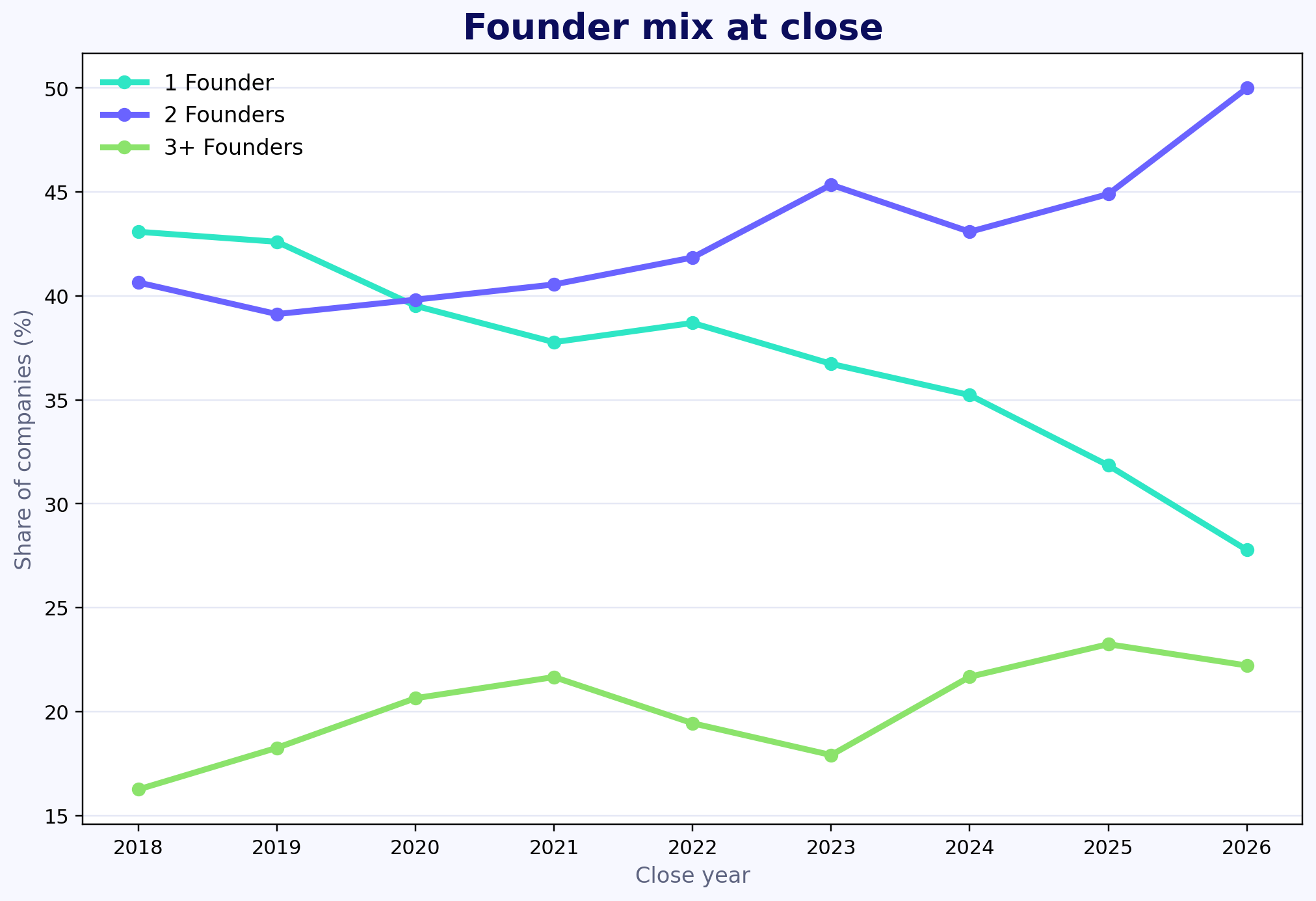
So let’s start with this eye-popping chart showing a massive decrease year over year in the number of single-founder companies who successfully close a funding round:
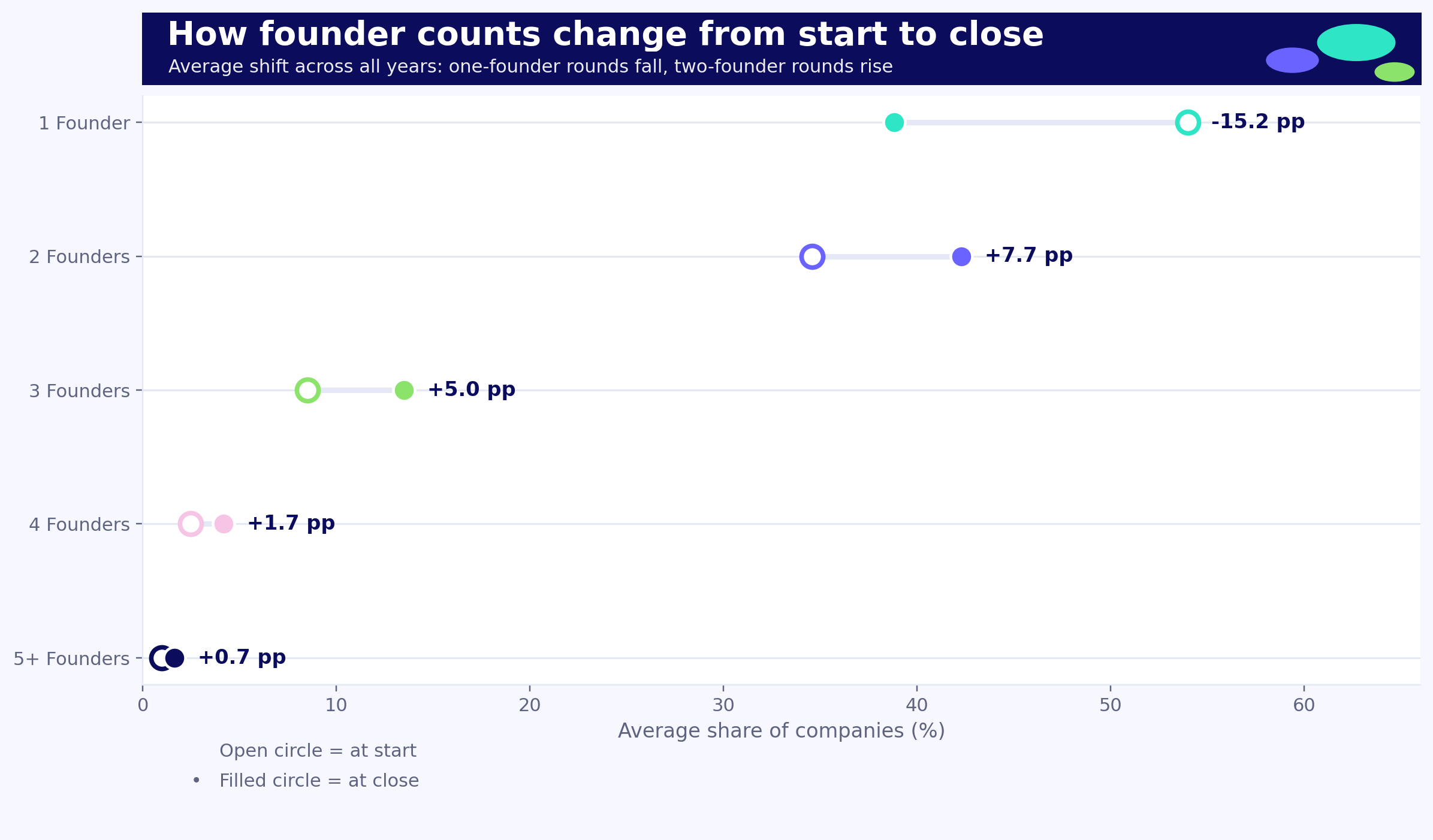
To dive into those numbers, this chart shows the delta in funding round success rate from start to close based on the number of founders.
You can see that having a solo founder is a negative on the likelihood of a funding round being successful.
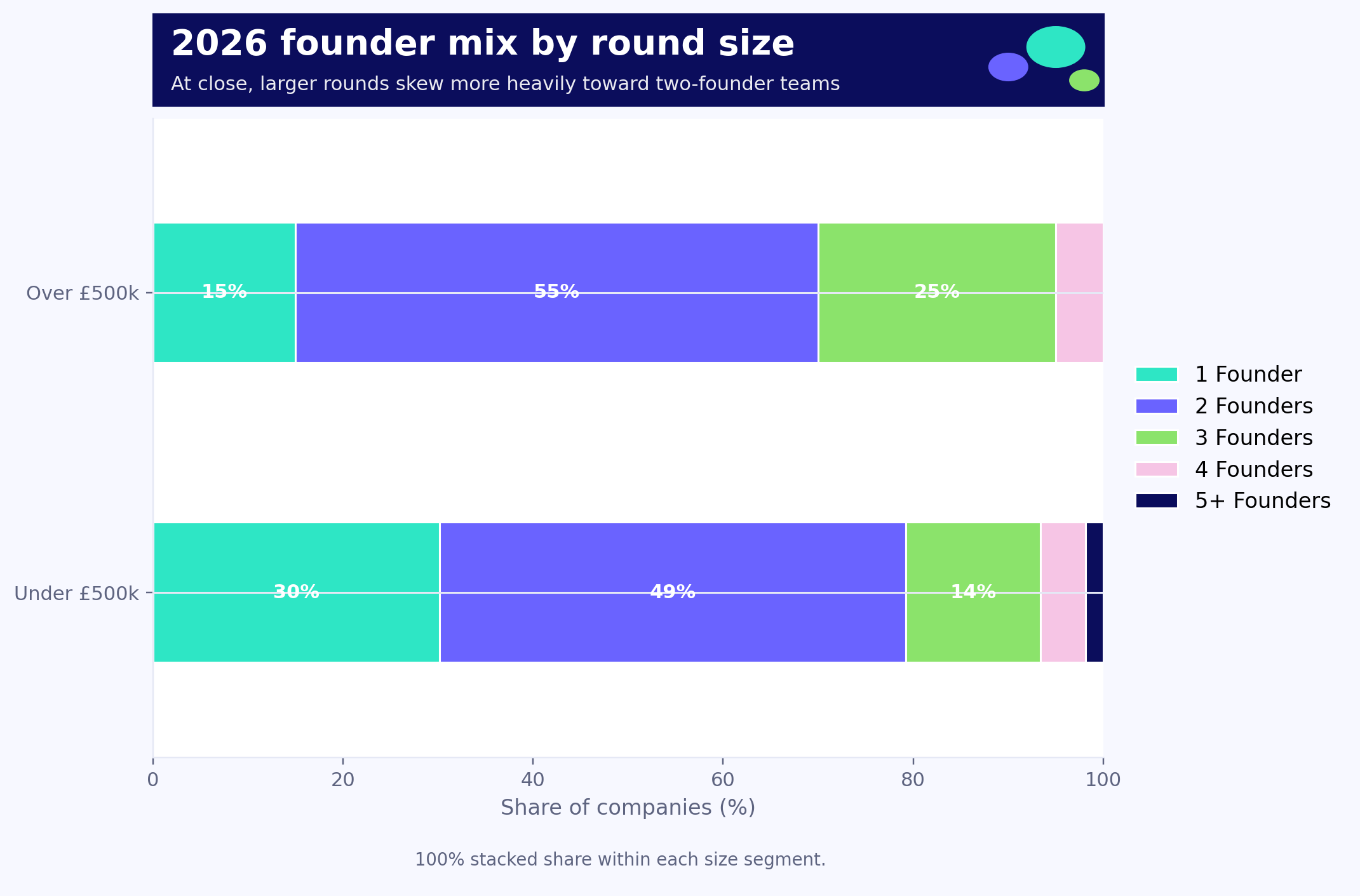
And here are the latest numbers from 2026, showing the percent of companies raising less than £500k versus more than £500k by number of founders:
You can see here the penalization of solo founder this chart shows the reduction in success for a funding round for solo-founder companies. In other words, the delta between starting a round and closing a round as a penalty for solo-founder companies by year:
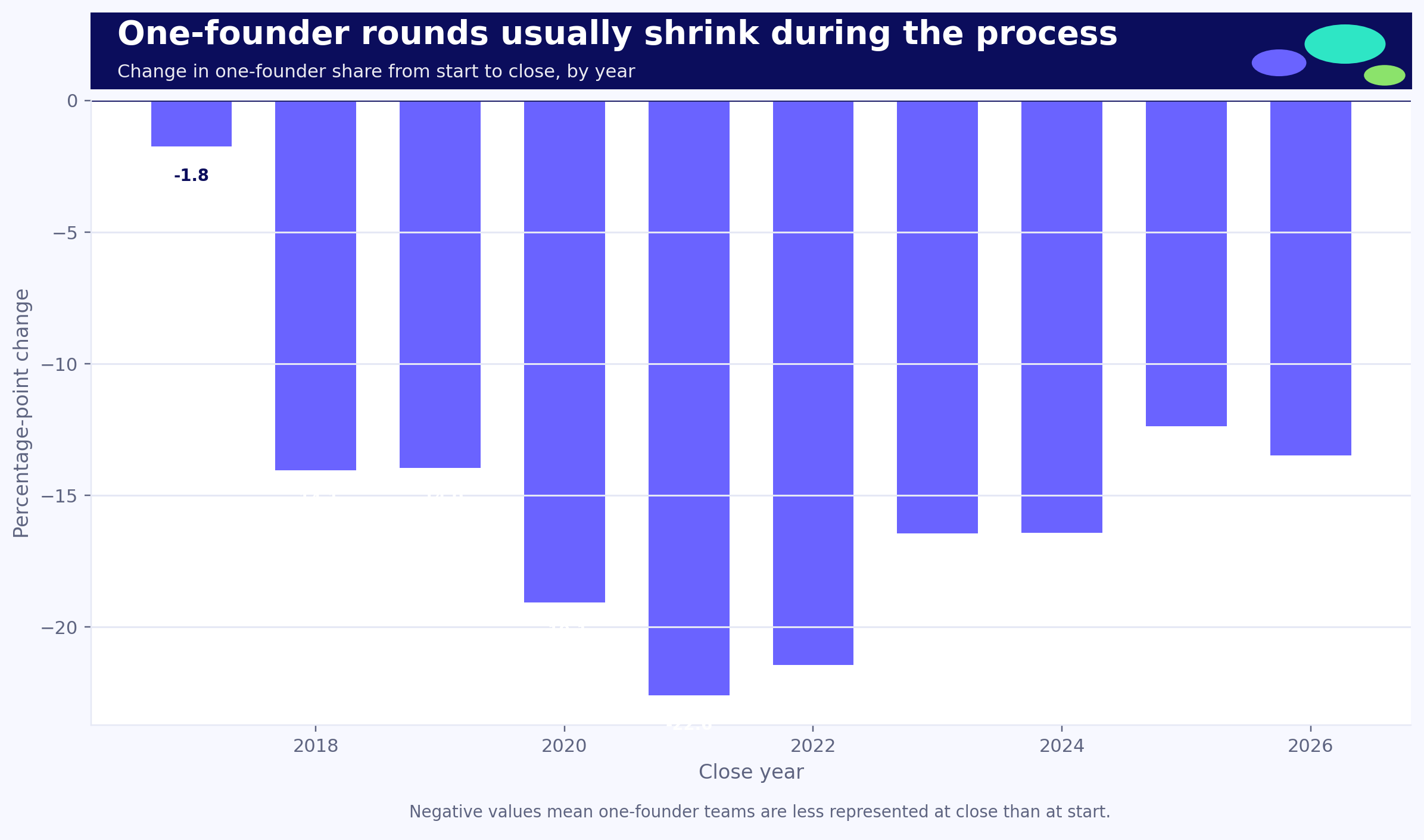
The big question here is: Why the massive drop over the years?
Actually it’s probably not what you’re guessing. It’s likely not that there’s been any fundamental change in solo-founded companies or AI or anything like that.
The most likely change, we think, is that funding rounds are, in a sense, dinosaurs these days. The vast majority of early-stage funding is with companies raising SeedFASTs.
That means they raise £50,000, £100,000, or even £200,000 or more with SeedFASTs (or, in the US, with SAFEs) and only then go on to open a funding round. What we’re probably seeing is companies starting with perhaps one founder, raising small amounts with SeedFASTs to get an MVP built, and then getting a second founder prior to doing their first actual funding round.
That would seem to mean that the number of solo founders at the time of a first funding round is dropping, but actually that’s reflecting the fact that actual funding rounds are now being done by slightly later-stage companies and the original founder has gotten themselves a co-founder in the meantime.
I’ll end by making it clear there’s nothing wrong with solo founders and nothing wrong with starting a company as a solo founder. Being a solo founder saves having to find a co-founder and for sure avoids the problem of founder fallouts (10% to 20% of startups will have founder fallouts, some of which can kill the company).
The goal is to create a great business that is successful, and potentially even one that does not require funding. Unfortunately too many startup publications like TechCrunch celebrate fundraising success, which leads to the amount of money raised and the valuation being the measure of success rather than, for example, revenue and profitability.
But if your goal is to be an equity-fuelled company and raise investment, then the data makes it clear: being a solo founder puts you at a disadvantage compared to companies with two or more founders.



Summers can be slow for startups but Ava Shoraka and Yanki Kizilates are here to help founders gain momentum during thi...

A successful exit doesn't happen overnight. In this webinar, experienced M&A advisers share what acquirers look for, how...


A great financial forecast does more than project numbers – it tells a compelling story about how your startup will grow...