












Sunbathing or scaling? Founder tips to beat the quiet season
Summers can be slow for startups but Ava Shoraka and Yanki Kizilates are here to help founders gain momentum during thi...


Already have an account? Log in


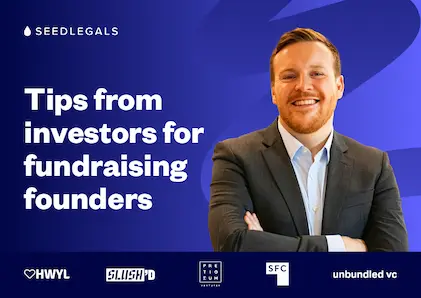
I speak to thousands of founders at SeedLegals. Many are looking for warm intros to investors. Unfortunately, unless you’re super well connected, that’s going to be tough, but there is a way, as I explain in the video.
Most founders struggle to fill even a small funding round. But one common mistake is the opposite, where founders try to raise too much, too early. They’ve probably been reading TechCrunch. A founder might come to me saying they want to raise £1m at a £5m valuation before they’ve launched the product. That means they’re pitching to VCs who expect the business to be further along and it ends with the inevitable “Love what you’re doing, come back later”.
So here’s how to find investors, get warm intros, decode investor feedback, and get that investor money in the bank.
Many founders struggle to fill even a small funding round. But one common mistake is the opposite, where I see founders trying to raise too much, too early. They’ve probably been reading TechCrunch too much or eyeing US valuations. A founder might come to me saying they want to raise £1m at a £5m valuation before they’ve got revenue. That sounds exciting. In practice, it often means they’re pitching to VCs who expect the business to be further along.
The result is a frustrating Catch-22:
You’ll sometimes hear advice from investors like “It’s just as easy to raise a big round as a small one.”
In my view, that is seriously bad advice.
Larger rounds usually mean:
For most early-stage startups, a smaller first raise is often the smarter route. Raising £50k to £250k from angels can help you hire, build faster, get traction and learn from customers without spending forever trying to close a huge round.
And once you’ve got traction? Fundraising gets dramatically easier.
Investor feedback can be useful but it can also be wildly inconsistent.
One investor says raise more.
Another says raise less.
Another tells you to pivot into cybersecurity.
If you react to every opinion, you’ll end up going in circles.
The trick is to look for patterns. If multiple investors are all saying you’re too early for your valuation, that’s data worth paying attention to. But random one-off opinions? Treat them carefully.
Great founders don’t blindly follow feedback, but they don’t ignore it either.
Here’s the practical approach:
Simple, but there’s a catch.
If you want someone to intro you, make it effortless for them.
Don’t send a huge essay about your startup. Give them two or three clear sentences they can forward immediately:
The easier you make it, the more likely people are to help.
One of the best ways to create a warm intro is meeting investors in person.
Go to startup events. Talk to people. Network.
Even a brief conversation gives you a reason to follow up afterwards:
“Great meeting you at the event yesterday…”
That tiny bit of familiarity massively increases your chances of getting a response.
Fundraising isn’t about finding one magical investor who writes a cheque instantly.
It’s about momentum.
Often, the fastest route isn’t trying to raise the biggest round possible. It’s raising enough to get traction, proving the model, and coming back stronger later.
And if you don’t have warm intros yet? Don’t worry. Most founders don’t.
You just need to start building them.

Summers can be slow for startups but Ava Shoraka and Yanki Kizilates are here to help founders gain momentum during thi...

A successful exit doesn't happen overnight. In this webinar, experienced M&A advisers share what acquirers look for, how...


A great financial forecast does more than project numbers – it tells a compelling story about how your startup will grow...