If you’re pitching and getting nowhere right now, don’t pack away your deck just yet – now is the time to fire up your fight.
The SeedLegals Awards applications have officially opened and, after last year’s record-breaking entries, we know our community’s been thirsty for actionable entry tips and tricks that can make them stand out in a crowd of hundreds.
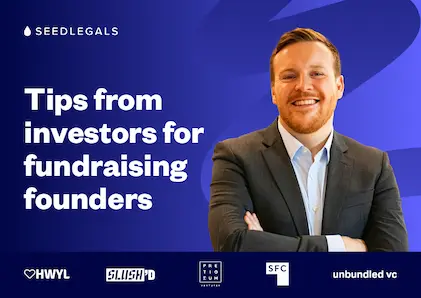
SeedLegals CCO Aly Read recently sat down to chat with three of our judges from SeedLegals Awards 2024 and 2025:
They reveal what makes a great pitch and the mistakes that often repel investor money.
Want to learn how to cut through the noise and make sure investors pay attention to you? Watch the webinar below.
Key takeaways
What makes a pitch catch an investor’s eye?
- Keep it clear. Investors want to know not only how well you understand the problem you’re solving, but also why it’s a real problem and how big it can be. This is an indicator of both your character as a founder and your startup’s potential.
- Can you pitch precisely and authentically in half a minute? There’s often a massive investment on the line but that’s the reality – you need a lean-in moment within the first 30 seconds of opening the deck. The average investor is seeing thousands of pitches a year, so you have to spark their interest.
- Some investors prefer videos over decks – and they know there’ll be friction as a lot of people don’t want to. But this is a useful test for founder personality and communication skills. Production value doesn’t matter, but make sure you’re sitting down in a quiet room to show care and preparation.
Grab tickets for the SeedLegals Awards 2026
🤝 Network with 400+ founders, investors and industry leaders
🥂 Leave with answers, startup spirits… and maybe even a cheque
What's new?
Learn from exclusive pre-event investor breakout sessions, with a VIP ticket
Secure yours now
Balancing narrative and traction – what carries more weight?
- A brief narrative is great – but let your customer speak for you. It tells the investors who’s interested in your product and who’s willing to pay.
- On the other hand, pre-seed investors often rely more on narrative, because there’s less traction to evaluate. They want to understand the pain point you’ve identified, why it matters, and why your team is well-placed to solve it. Before traction exists, your conviction and clarity carry a lot of weight.
- What about if you have no revenue and you’re competing for funding with people who have revenue? The bar will be higher because the investors need proof that people want your build.
- Last year, only 13% of SLA entries disclosed any actual evidence of traction and revenue numbers or contracts they have signed. And only 3% talked about a customer – we’d love to see more of that data this year.
We’re not looking to see that the solution has already scaled. Just getting clarity and validation around the fact that there is a strong problem – that itself is more rare than you think it is.
Shruti Iyengar
‘Investable’… what does it mean to the investors?
- Your cap table and deal structure are important from the get-go. Investors will look at your ownership: how much equity you’ve given away and at what valuation. If you’re giving away larger chunks for very low valuations early on, future rounds could be difficult.
- The odds have to be that the upside outweighs the risk, especially in a high inflation environment – those with their skin in the game prove that they’re committed. Whilst high street banks are offering 4.5% and private banks 12%, venture investors need £100m+ outcomes to move the needle. Investors are looking for founders who can hit home runs.
- Businesses pivot but founders have to be in it for the long haul. The average founder-investor relationship lasts around 10 years (longer than the average marriage) so investors need to believe you’ll stay through the highs and lows.
How are founders weakening their pitches? What can they avoid?
- Coming in immediately with an exit path makes you look unambitious. Founders should be aiming to build a business that can be hugely profitable at scale. While it’s good to think about your exit strategy, the exit shouldn’t be the opening statement you use.
- Some companies re-label depending on what the trend is. Maybe you were a climate company and now you’re a defense one. Forcing yourself to fit within a category dilutes your focus and indicates that you’re being inauthentic about what your business is actually trying to achieve – investors can also tell if you’re specialised in that sector.
- Heavy PR can look like a red flag if the build itself isn’t fully fleshed out. Over-reliance on media coverage gets sussed out during due diligence so concentrate on your business strategy first, PR second.
- Never say you have no competitors or that you’re only going to raise one round. The moment you take venture money, you switch from a lifestyle business to a venture-backed business… and that investor is ultimately interested in one thing: the exit. Claims that you’ll be profitable by year end are often not true.
What convinces investors that you’re the one?
- Find an idea that can’t be copied. Something that changes unit economics and fundamentally disrupts business. This is about being 1000% better, not just 10%. Generational-defining companies – the Anthropics and Stripes of the world – are examples of this.
- Be honest about co-founder relationships and understand the risks. How do you know each other? Are you friends outside of work? Are you married? Investors want to see that you’ve stress-tested the relationship before you take their money – because messy founder breakups can cause equity problems.
- Conviction. You need to be able to demonstrate that this is something you can see yourself spending your foreseeable future working on.
- Don’t define yourself with job titles. Your career history might include some impressive company names – but investors care more about the skills you bring to the team and less so the prestige of a previous role.
One of the challenges with solo founders is there’s just so much work to do, and fundraising alone can almost be a full-time job – one of the main reasons investors lean toward co-founders.
Fred Soneya
How to stand out to SeedLegals Awards judges
This year, we’re doing things a little differently and taking entries via two short videos, each two minutes long. This format is designed to help you shine beyond written applications, giving judges a real sense of your energy, passion, and story in a much more authentic way.
- When filming video entries, pour in your personality and passion and show investors that you don’t need polished prose to communicate a strong idea.
- Think about the meaning of the category you’re applying to and tailor your pitch accordingly. For instance, if you’re applying for Inspiring Entrepreneur, you might consider whether your story would genuinely inspire others to make changes in their own lives. If you’re applying for Eco Innovator, make it clear that sustainability is the star of the show and not just a side that goes with your build – use a lockstep model to prove that the more you sell, the more positive an impact you have.
- Speak in a way that resonates with judges – answer every question, perfect your pitch, and load in the metrics to back you because it’s very unlikely that the judges will know anything about you before they see your entry.
- You’re not being assessed on how well you’ve edited the video or how nice your background is, so don’t get bogged down with production value. Just prepare well, seat yourself in a quiet, clean room… and give it your best shot!
Enter the SeedLegals Startup Awards 2026
🏆 13 awards for founders and investors
💰 A £50k investment offer
🚀 Recognition from the startup ecosystem
Enter now




















 Shruti Iyengar
 Fred Soneya