Investors are skilled at surfing the choppy waters. But with AI making MVPs a weekend project and the bar for startup traction climbing higher, the wave patterns are shifting. So what should you be looking for – and where should you be looking?
Join SeedLegals Investor Commercial Lead Michael McDowell as he chats to Symvan Capital’s Investment Manager Michael Theodosiou, to get the inside track on today’s startup investment market: the sectors building up heat, the red flags to be aware of, and how to develop a hands-on approach to investment strategy.
Want some expert advice for investing in 2026? Watch the webinar below.
How’s the market been looking in the new financial year?
- The market has historically always been a bit tricky for fundraising – with a few exceptions such as during 2021 when the market was paradoxically awash with money and people were raising at very high valuations easily.
- There has been a noticeable backdrop of uncertainty, particularly with the current geopolitical outlook and tensions in the Middle East, which has given many investors reason to pause.
- However, despite the high risk, there’s a strong reward – maintaining a degree of optimism in the market allows investors to look past short-term volatility and focus on the 5-10 year horizon that early-stage investing requires. And sometimes the highest achieving investors are the ones willing to take that risk for their portfolio.
Expectations for startups in the age of AI
- A greater proportion of startups in Michael Theodosiou’s investment pipeline have demonstrable proof of what they’re trying to achieve as well as evidence of traction.
- AI has raised the bar for what you have to demonstrate as a startup to be in the conversation. Coming in with the mindset that more could be expected of you drives you to strap in for a difficult journey, and it filters out anyone wanting to run a lifestyle business.
- For software investors, there’s no longer a technological moat to cross. With the help of AI and the right knowhow, creating an MVP for a software tool over the course of a weekend is now easy as pie, unlike with life sciences or deep tech.
- This means your investment falls on the founder – their skill set, expertise, networks, and the experience they have in the industry they’re trying to tap into. Investors look for founders who have experienced a problem in a previous life and are now going out to solve it. You don’t want to invest too much stock in the software itself.
- All of these factors help to lower the investor’s view of the ‘execution risk’ – the more you’re able to show, the more faith they’ll have in you as a founder.
Perfect your pitch
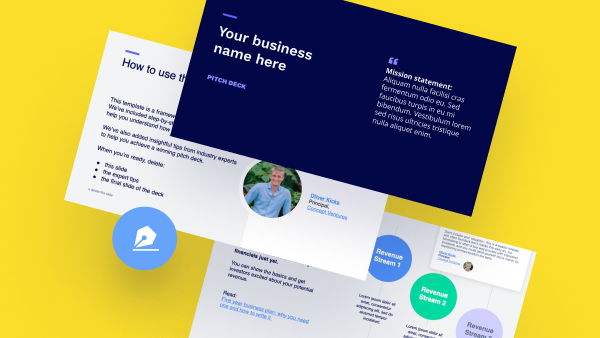
Use our free ultimate pitch deck template: includes step-by-step guidance & tips from investors
Get the free template
So. Which sectors are pretty hot right now?
- Defence tech (and dual-use technology): Startups building products with both civilian and defence applications continue to attract strong investor interest.
- AI infrastructure: Look beyond ChatGPT-style applications. Investors are increasingly interested in the companies building the underlying technology, such as reasoning models and the infrastructure that powers AI.
- AI governance and compliance: As AI becomes more widely adopted in industries like finance and government, businesses need ways to implement it safely, ethically and responsibly. Solutions that improve traceability, auditability and compliance are likely to become increasingly important.
- Regulatory technology: The EU AI Act is rolling out in a similar way to GDPR, creating new opportunities for startups that help businesses navigate AI regulations.
- The less glamorous opportunities: Not every great investment is flashy. Some of the strongest businesses solve everyday operational problems that customers simply can’t live without.
- A final tip: don’t assume the hottest sector is automatically the best place to invest. Markets that generate the most excitement are often the most over-hyped. Instead, look for startups solving genuine problems with products people truly need.
Tips on working with startups/companies
- If you want to be an activist and involved investor, you should also know a bit about what the company is doing – this is easier if it’s an area you already understand and have some experience in or knowledge of.
- Angels can deliver huge amounts of value and are well positioned to impact the direction the company takes post-investment – since you have a clear economic interest after the point you’ve invested, it’s worth getting actively involved.
- The most successful relationships are built on open dialogue, where founders can drop a quick text or phone call to update on ideas or discuss pivots – a free flow of information between both parties.
- Remember that being a founder is not just hard, but also quite lonely. Their livelihood is resting on a very risky proposition that historical data indicates they’re more likely than not to fail. They want investors they’d be genuinely excited to hear from – even on the worst days.
Managing portfolio relationships and governance
- In shareholder agreements, you might want to mandate a minimum number of board meetings per year. Unless it’s a mature company with other investors taking a much bigger position, you will always at least be an observer.
- Board meetings should also just be a formality – if you as the investor hear something for the first time during a board meeting, then something has gone wrong and both parties have failed to keep an open dialogue.
- When negotiating term sheets and subscription shareholders agreements, sometimes founders give pushback because they worry you’re going to be overbearing or restrict what they want to do. But any structure that’s there, especially as a pre-seed investor, is there to help you develop good habits.
- A pre-seed company’s financial forecast is out of date by the time you finish the call. Scrutinise what it is they want to raise now, how far it gets them, and what they’ll need thereafter. They won’t be held to a figure, but you want to know what the peak financial requirement looks like. Maybe they’re raising too much with only a short runway, or they need to factor in some punchy KPIs to justify that.
- For an angel, it’s about your resource. If you’ve come in at the pre-seed stage, you have pre-emption rights. If you’ve gone in nice and early at a fair valuation, then you should be able to follow on by using those rights.
Get answers fast, for free
Bring all your questions - we’ve got the answers!
We’ll match you with the right specialist.