














How to create a financial forecast: This is what startup investors need to see
‘How much money should we ask for?’ It’s one of the most challenging questions startup founders face when raising equity...


Already have an account? Log in


“How much should I pay myself?” is the question every founder asks – and one investors love to weigh in on.
Set the salary too low, and you’re living on instant noodles. Set it too high, and you risk raising eyebrows in the boardroom.
So what’s “normal”? The truth is, there isn’t one standard founder salary. But the data does give us benchmarks.
We’ve analysed UK funding rounds over the last five years to give you clear benchmarks on what founders actually pay themselves – and how those salaries shift with round size, stage, and investor expectations.
We analysed UK funding rounds that have closed on SeedLegals in the last 5 years and grouped them into round sizes:
Each founder is counted individually, so if a company has multiple founders, we tracked each salary separately.
 Ben O'Rourke
When we break the data down by round size and stage, it shows a clear picture of what’s happening in the market. UK funding rounds on SeedLegals make up a large, representative sample of the market with reliable salary data, so it reflects what founders are actually paying themselves right now.
Lead Data Engineer,
Unsurprisingly, salaries increase as round size goes up. Here’s the 2025 data:
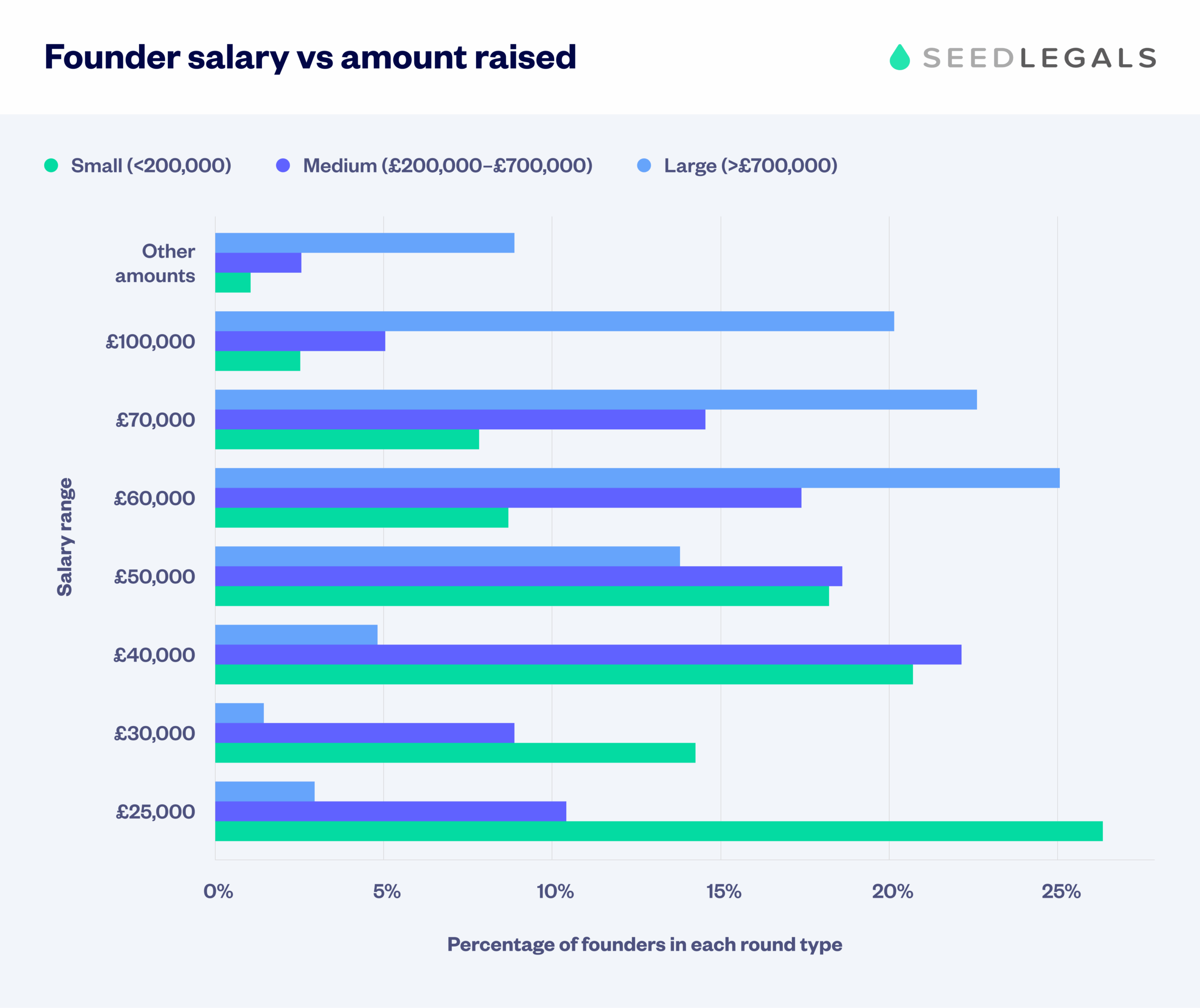
That said, there’s a wide range. Even at larger rounds, plenty of founders still take minimal pay (trading salary for runway and equity), while others move closer to market-level salaries.
For context: the average UK software engineer earns between £41k – £66k (sources), while senior roles in London push past £80k. A founder raising a Series A or beyond is paying themselves at a level broadly comparable to their senior hires.
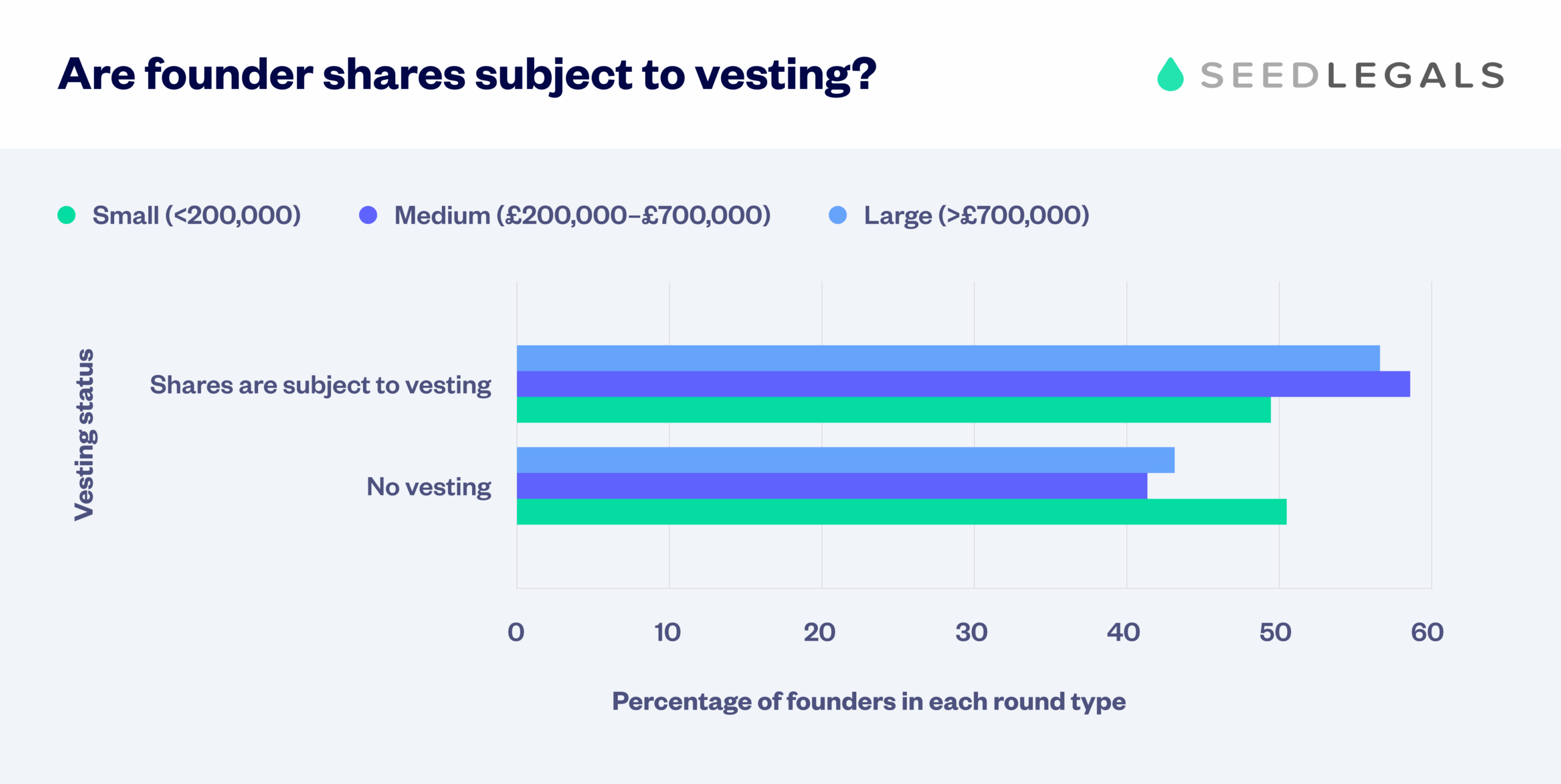
Salary is only one part of the equation. Equity structures are just as critical. To avoid founders taking the money and retiring, investors usually require that founders ‘reverse vest’ their shares over a number of years.
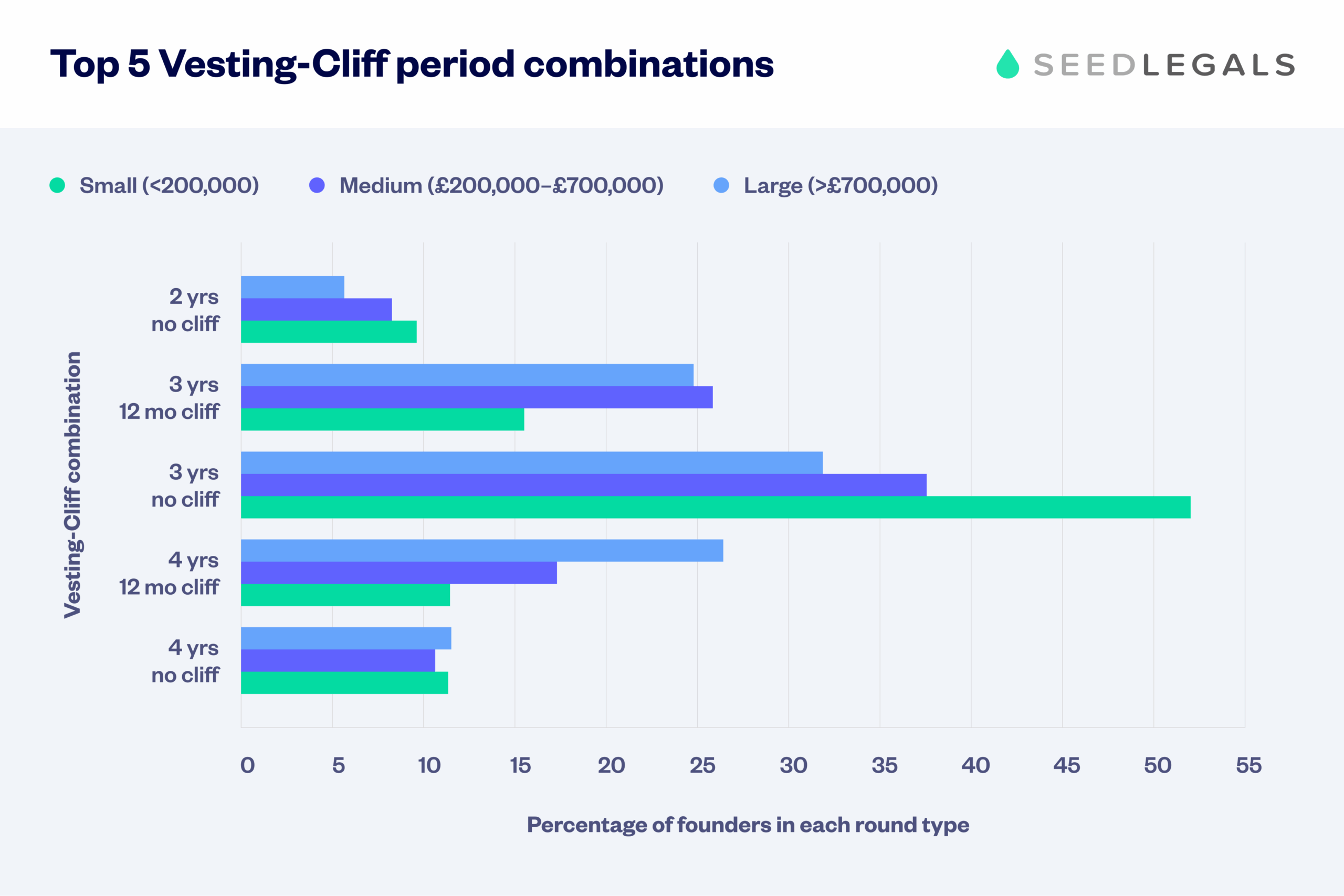
Reverse vesting means that if a founder leaves during the vesting period, they need to transfer back the unvested shares. Even if their shares are fully vested before the round, investors will often ask for a new vesting schedule to dissuade the founders from leaving right after their investment.
Here’s what the data shows about founder vesting:
 Anthony Rose
Vesting protects co-founders and investors if something goes wrong and a founder leaves. Investors want to know founders are committed to the company and won’t walk away with a big chunk of equity. Founders want to keep their stock if they leave the company. Vesting is the compromise and keeps the business investable.
Co-founder & CEO,
Read more on vesting:
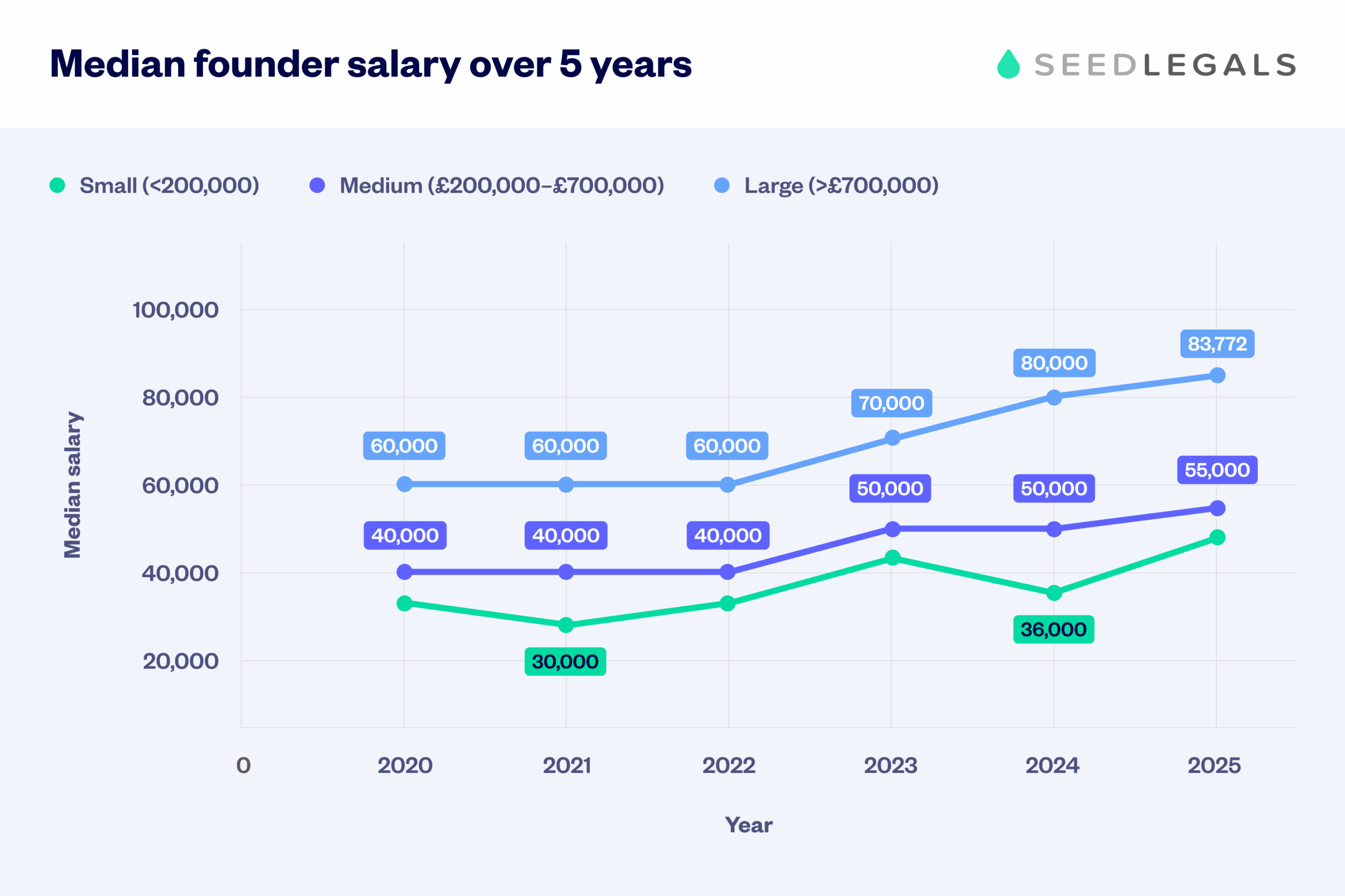
Between 2020 and 2025, founder pay has risen steadily across all round sizes:
Raising? Got questions about funding, equity or share option schemes? Book a free call with our team. We’d love to answer your questions and find out how we can help.

Article Sources



‘How much money should we ask for?’ It’s one of the most challenging questions startup founders face when raising equity...

As a founder, getting your team’s pay right can feel like a guessing game - but it doesn’t have to be. In this post, we ...

Learn what these essential documents are for and why you need them to start, run and grow your business.