What if you stripped your pitch back to its rawest form? Imagine discarding your notes and heading into a room full of investors, all waiting to be convinced by you and your story. Scary, right?
It might sound unattainable right now, but it is possible to prepare yourself for this kind of situation. Start by dissecting the anatomy of a standout pitch, using the helpful tips in this webinar recording with SeedLegals CEO and Co-Founder Anthony Rose, where he touches on stories of 3D engines crashing onstage, late-night elevator pitches in Amsterdam and the rise of The Pitch under SeedLegals.
Watch the session below to learn more about the psychology behind first impressions to the narrative patterns every investor unconsciously listens for, and find out how to craft a pitch that slices through the noise, sparks trust and inspires people to bet on you.
Key takeaways
The real goal of a pitch: sell the ‘why’, not the ‘what’
- Most founders make the classic mistake of explaining what they do, instead of leading with why it matters and why anyone would want it.
- A standout pitch always starts with the problem: what’s broken and why it absolutely needs fixing.
- You have just a few seconds to hook an investor. Make sure your opening resonates instantly with someone in the room.
- Your brand, message and story arc should be so clear that people walk away remembering you, the problem and the solution (in that order).
Mastering the different types of pitches
- One-minute pitches are brutal but freeing. No slides, but the clearest version of your story, from the problem to the solution, then to your traction and what you’re asking for.
- 3–5 minute pitches give you space to layer in founder backstory, market size, competition, business model and vision, but timing must still be razor-sharp.
- 30-minute investor meetings shouldn’t be 30 minutes of you talking, so spend the first minutes getting the investor to talk about themselves and their thesis.
- Whether short or long, the same golden rule applies: memorise your slides, keep the energy high and never turn around to read from the screen.
Perfect your pitch
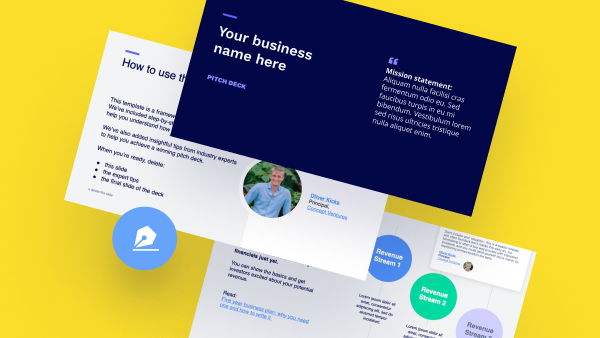
Use our free ultimate pitch deck template: includes step-by-step guidance & tips from investors
Get the free templateWhat investors are really evaluating (and what they won’t tell you)
- Investors judge two things: the size of the opportunity and the likelihood that you can execute, which is why confidence and clarity matter as much as the idea.
- They’re secretly wondering: Will this make money? Can this team pull it off? Does the risk feel manageable?
- A five-year forecast isn’t about accuracy but about credibility. Too small and you look like a “hobby business”; too big and it feels delusional.
- Angels and VCs have fundamentally different risk profiles. Whilst angels may accept 3–5x returns, VCs need power-law outcomes (30–50x).
Winning at investor meetings: confidence + control
- Talk for no more than 10 minutes and give investors space to ask questions. This will ensure the meeting becomes a dialogue, not a monologue.
- First job on any call: identify if they’re a lead investor or a follower – it completely changes your strategy.
- Always demo your product if you can; it helps investors see the consumer appeal, not just the spreadsheet logic.
- Maintain the room when things go wrong (slides fail, video breaks, screen share dies). How you react under pressure tells them everything about your leadership style.
Finding investors: become impossible to ignore
- Before you pitch anyone, they need to know you exist. You can post on LinkedIn, share updates, publish insights and show traction publicly – investors trust momentum.
- Use Companies House to identify who invested in similar startups and reach out with personalised, respectful messages.
- Treat LinkedIn like a series: your first message’s job is only to get the connection accepted. Don’t use this as an opportunity to ask for investment.
- Avoid outsourcing fundraising too early; investors want to see founders who can sell, lead and stay involved in the process.
Get answers fast, for free
Bring all your questions - we’ve got the answers!
We’ll match you with the right specialist.