











How much equity to give to a late-joining co-founder?
You had an idea. You’ve been working on for a few months. You really need a co-founder. You meet somebody. Now the...


Already have an account? Log in
There’s a lot of debate right now about a proposed government ban on non-compete periods.
A group of well-funded AI companies are lobbying the government to ban non-compete periods so they can poach Google and DeepMind employees. Well, that’s my take on the push for this.
But how many employees really do have huge notice periods, non-compete periods, and garden leave periods?
So we ran the numbers on a sample of 40,000+ employment agreements created on SeedLegals: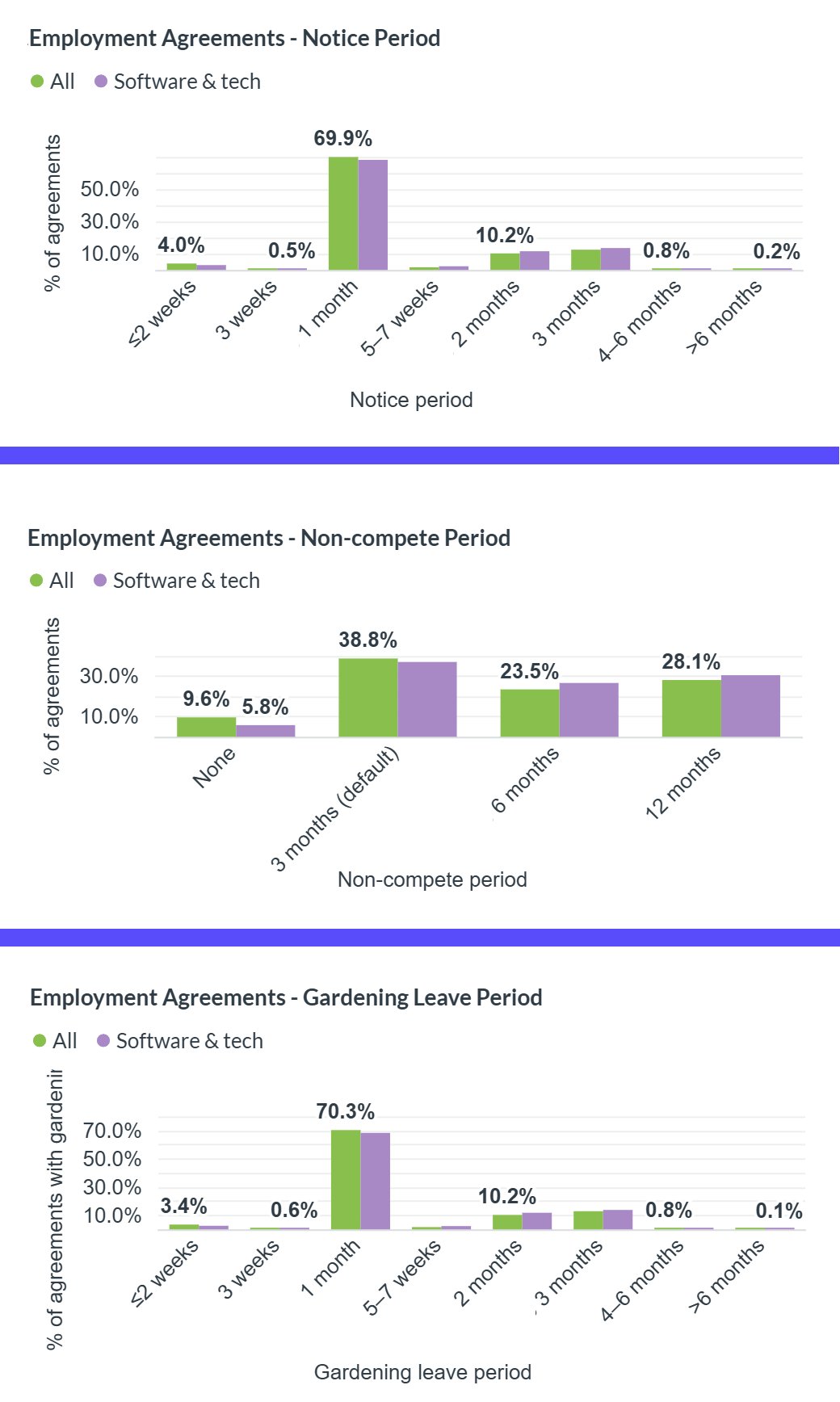
Our sample is based on SeedLegals customers, which are early-stage UK startups – i.e. the charts above not going to include the lengthy non-competes that Goldman Sachs and JP Morgan bankers will have in their contracts, or the lengthy garden leave provisions that equities traders will have in theirs.
The data makes it clear that for early-stage startups,
So we’re thinking, what is all the fuss about with this proposed government ban… These terms look fairly sensible and exactly what a startup founder would be looking for.
BTW, at SeedLegals, for our team we have
We don’t know the terms of the proposed government changes – we’ll keep monitoring that and update the employment agreements on SeedLegals to comply with any legislative changes, and also to continue to give founders the flexibility to build their team and hire people on the terms that make sense to them and their business.

You had an idea. You’ve been working on for a few months. You really need a co-founder. You meet somebody. Now the...

Most founders think they have validated their startup idea. Here is why the evidence usually fails, and the three questi...


Of course you ignore GDPR. Right up until you get an email “Send me all my data. Delete everything you have on me.” Sud...