












SeedLegals partner stack for US expansion
For UK founders looking to expand to the US, raise from US investors or do the Delaware Flip (moving your company to the...


Already have an account? Log in
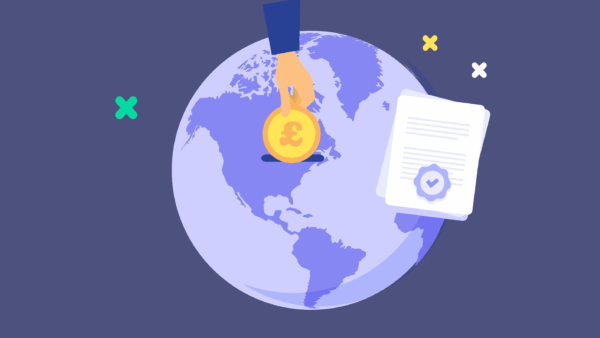

Every day, 2-3 founders call me asking about the Delaware flip. They’re finding it hard to raise from UK investors. They reach out to US investors, get a bite. The US investor wants them to have a Delaware C Corporation. But what happens to existing SEIS or EIS investors? And can they continue to raise SEIS/EIS after they flip the company to a Delaware C Corporation?
I was talking to a UK founder who has a US investor wanting to invest $300k but insists on a Delaware C corporation. He also has some interested UK angel investors. What to do next?
I decided it was time to make a video to show how you can preserve SEIS/EIS when flipping your company to Delaware and how you can continue to raise SEIS/EIS from UK investors after doing the Delaware flip.
12 months from now, incorporating in Delaware from the start will be the norm for ambitious UK founders. At SeedLegals our goal isn’t to get UK founders to leave the country; it’s to help you get investment and grow your company faster. If you’re considering US expansion or raising from US investors, SeedLegals is the only platform that gives you a seamless UK-US bridge. You can even incorporate your Delaware company on SeedLegals for under $500.
Raising from US investors has become one of the biggest trends among UK startup founders. I speak to thousands of founders through SeedLegals, and more and more of them are facing the same situation:
UK fundraising hasn’t quite worked out — but a US investor is interested, and they insist the company must be Delaware.
This article explains why US investors insist on Delaware, how a Delaware flip actually works, and — critically — how you can still raise SEIS and EIS from UK investors at the same time.
In the UK, we’re familiar with SEIS and EIS, which provide generous tax reliefs for early-stage investors.
In the US, the equivalent incentive is QSBS (Qualified Small Business Stock).
Here’s why QSBS matters:
It applies to US C corporations (not UK companies).
If a US investor holds their shares for five years:
They pay no federal capital gains tax
On the higher of $15 million or 10× their investment
That tax treatment is a huge driver for US angel and seed investors. As a result, many will simply not invest unless the company is a Delaware C corporation.
A typical case looks like this:
A UK startup has tried raising locally for months
A US investor offers (say) $300,000
The investor insists on Delaware
Meanwhile, UK angels are still interested — but only if they get SEIS or EIS
So the big question founders ask me is:
“Do I have to choose between US money and SEIS/EIS?”
The answer is no.
Many founders don’t realise this:
You can raise SEIS and EIS into a Delaware company, and you can preserve SEIS/EIS for existing investors when you do a Delaware flip.
SeedLegals supports this end-to-end.
The first step is creating a Delaware parent company.
How it works:
A new Delaware C corporation is formed
The existing UK company becomes its subsidiary
Shareholders swap their UK shares for equivalent shares in the Delaware parent
Historically, law firms charged £40k–£50k for this.
Our goal at SeedLegals is to make this:
Fast
Standardised
Affordable (around £5,000, working with partner US law firms)
Within a week or two, the company is ready to:
Accept US investment
Issue shares under a Delaware structure
Qualify for QSBS
Once the Delaware company exists, you can still raise from UK investors — but there’s an important extra step.
To raise SEIS or EIS, the Delaware parent must:
Register as a foreign entity with Companies House
Cost: £70
You’ll then need a UTR (Unique Taxpayer Reference).
⚠️ Reality check:
Companies House can take 6–8 weeks (or longer) to issue a UTR
Most UK founders already have enough UK presence to satisfy HMRC requirements during this period
This registration is separate from having a UK subsidiary — and it’s the foreign entity registration that matters for SEIS/EIS.
Once registered:
This is done into the Delaware parent
SeedLegals handles this flow for foreign entities
After approval, you’re fully set up to raise from UK angels — even though your parent company is US-based.
US investors usually invest using SAFEs.
But here’s the catch:
❌ You cannot just download the YC SAFE and use it for UK investors.
Why?
YC SAFEs typically convert into preference shares (SEIS/EIS disqualifying)
They don’t include a long-stop date
They are not SEIS/EIS compliant
On SeedLegals US, we’ve built a one-click option:
Create a SAFE
Tick: “Investors want SEIS/EIS”
The SAFE will:
Convert into common stock
Include a 6-month long-stop date
Be fully SEIS/EIS compatible
This means, uniquely, you can:
Raise from US investors on SAFEs
Raise from UK investors with SEIS/EIS
All within the same Delaware structure
Even with a Delaware parent, most founders:
Continue hiring in the UK
Need UK employment contracts
Need UK option plans and agreements
SeedLegals supports:
UK employment agreements
UK subsidiary setup and management
Group cap tables showing both UK and US entities
Everything stays in one place.
When it’s time to raise a priced round:
SeedLegals converts your SAFEs
UK investors retain SEIS/EIS compatibility
US and UK investors sit cleanly in the same round
This is something no other platform currently offers end-to-end.
Once founders expand into the US, there’s more to deal with:
US tax filings
State compliance
Immigration and visas
We’re working with trusted partners to make the entire journey — from fundraising to relocation — dramatically easier than it’s ever been.
My goal isn’t to push founders out of the UK.
My goal is simple:
Help startup founders raise investment and grow faster — wherever the capital is.
If you’re thinking about US investors, a Delaware flip, or how to balance QSBS with SEIS/EIS, SeedLegals is here to help.



For UK founders looking to expand to the US, raise from US investors or do the Delaware Flip (moving your company to the...
Expanding into the US is a huge opportunity for UK startups. It’s the world’s largest market, packed with customers, cap...
When UK founders hear success stories from Silicon Valley, the temptation to do a Delaware Flip is real: launch ...