








How to value your startup for fundraising
Set your startup's valuation confidently. Get clarity on your startup's valuation and how much to raise with data-backed...


Already have an account? Log in
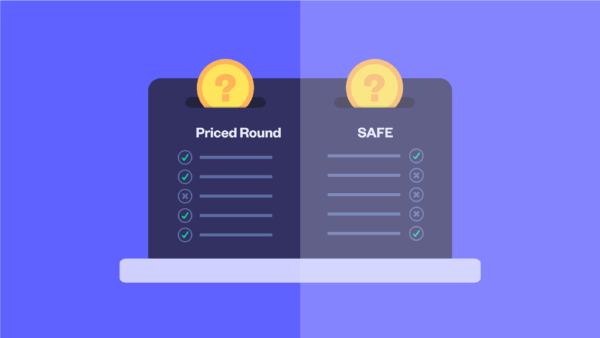
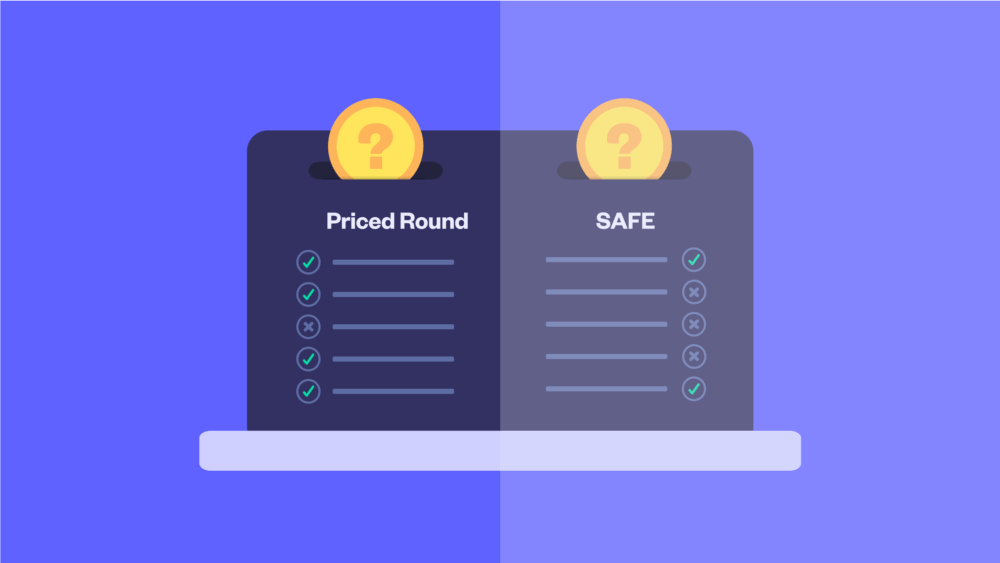
📹 Watch first: Anthony Rose, CEO and Co-Founder of SeedLegals, explains why raising with SAFEs isn’t always so safe… and when a priced round might be the smarter move.
When you’re gearing up to raise funding for your startup, one of the first big decisions you’ll make is how to structure the deal: SAFE or priced round? A priced round is when you’re raising money at a set company valuation, while a SAFE delays that decision until later.
Founders like to use SAFEs (or Simple Agreement for Future Equity) because they’re a fast and flexible option, which makes it appealing in the early days.
But here’s the catch: if you keep stacking SAFEs, the dilution can add up in ways you didn’t plan for. That’s why more founders are now choosing to switch to priced rounds earlier than before.
In this article, we’ll walk you through why that happens, what the trade-offs are, and how to decide which route makes sense for your raise.
In a priced round, investors give your company money in exchange for stock in your company at an agreed valuation. The ownership percentage each investor receives is fixed up front, based on the valuation and the amount invested.
You’ll negotiate key terms like:
The company also actually issues those shares immediately, so investors become equity owners from day one.
The result is a clear, upfront agreement about who owns what and how your cap table looks after the round.
But, in contrast, SAFEs don’t issue shares right away. They convert into equity later – usually at your next priced round.
With older or ‘pre-money’ SAFEs, ownership percentages weren’t clear until conversion. Since the Y Combinator post-money SAFE (which is now the standard), that changed. Here’s how 👇
The table below shows the key differences between SAFEs and priced rounds.
| Feature | SAFE | Priced round |
|---|---|---|
| Upfront valuation needed | ❌ | ✅ |
| Stock issued immediately | ❌ | ✅ |
| Starts QSBS clock | Generally assumed to start, but debated | ✅ |
| Legal and admin complexity | Lower | High (medium with SeedLegals) |
| Fast to close | ✅ | ✅ (with SeedLegals) |
| Ideal for top-up fundraising | ✅ | ❌ |
A few years ago, priced rounds were considered ‘too much too soon’ for seed-stage startups. They took months, cost tens of thousands in legal fees, and were usually saved for when VCs got involved.
But that’s changed. Because now (thanks to SeedLegals) you can now close a priced round in just days for a fraction of the cost, which means more founders are choosing to do them earlier.
Here’s why a priced round might be the better move for your raise.
In a priced round, you know exactly how much equity you’re selling and what your cap table looks like after the round. Every investor has their shares, and your dilution is known upfront.
Compare that with SAFEs. With SAFEs, investors are promised a fixed percentage of the company, but they don’t actually get shares until later. If you issue another SAFE, the new investor also gets a fixed percentage. The earlier SAFE investors aren’t diluted. Instead, the extra dilution comes out of the existing shareholders’ ownership (usually the founders).
The more SAFEs you stack, the smaller the founders’ share becomes. But in a priced round, shares are issued straight away, so existing shareholders and earlier investors dilute together.
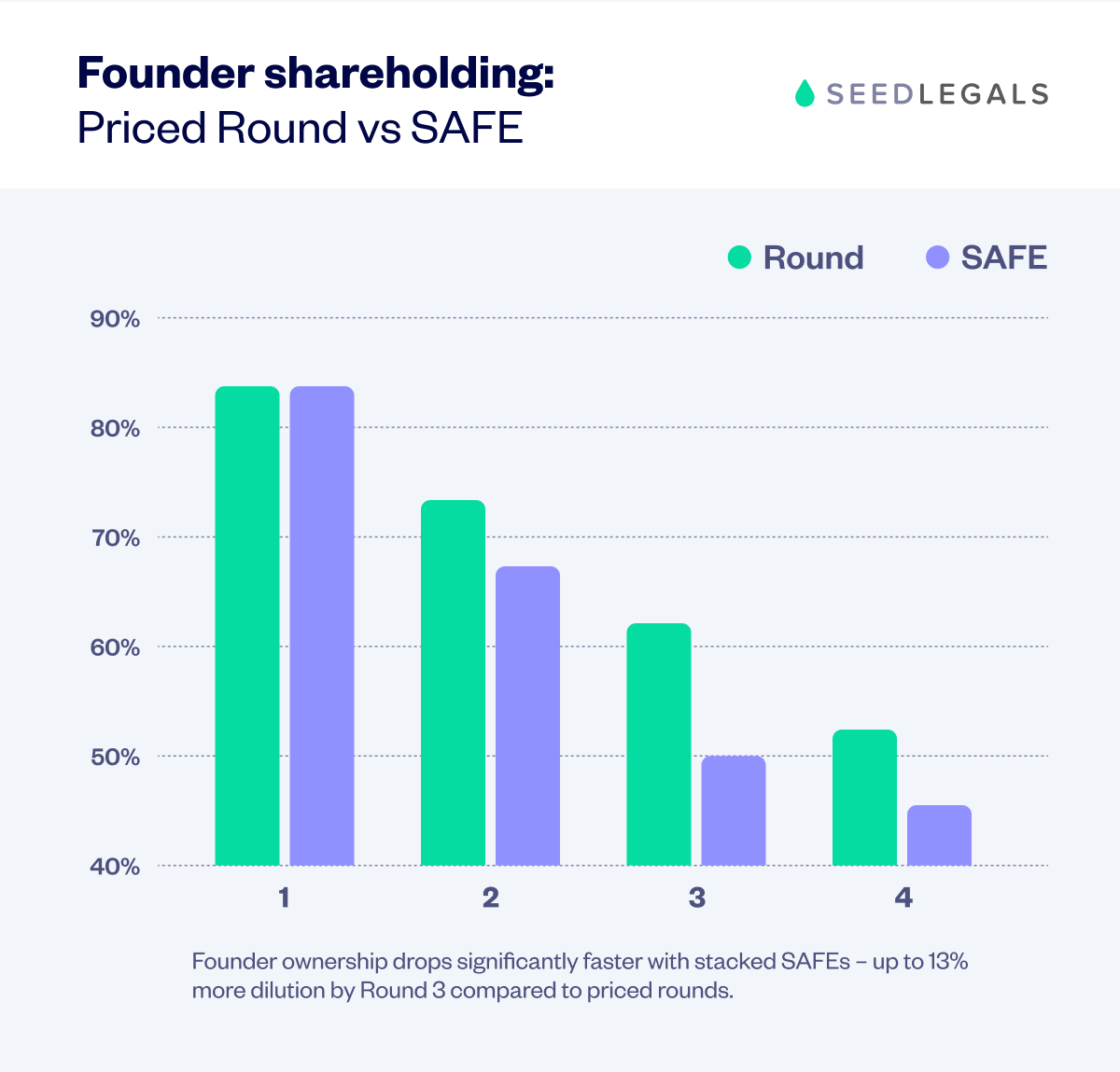
Let’s run through an example to show this.
Say Jamie raised three SAFEs over 18 months totaling $9 million:
At the time, each raise felt straightforward. No shares were issued, so Jamie didn’t see the dilution immediately.
But when the company later raised a $10 million Series A at a $50 million valuation, all three SAFEs converted at once.
Each one took around 17% of the company.
Stacked together, those three rounds added up to about 50% of the business. And that’s before the new Series A investors got their shares.
By the end of the round, Jamie’s ownership had dropped below half.
If those later raises had been done as priced rounds instead of SAFEs,the dilution would have been spread across all shareholders at the time, meaning Jamie would have kept a larger stake.
Priced rounds start the Qualified Small Business Stock (QSBS) clock immediately, because shares are issued right away. QSBS can be a powerful tax break – potentially saving investors (and sometimes founders) millions of dollars in taxes, provided you hold the stock for more than five years.
With SAFEs, the industry view is generally that the QSBS clock does start when the SAFE is issued. But it’s not as clear-cut, because no stock changes hands until conversion. That’s why investors often prefer the certainty of a priced round.
When you head into a Series A, a clean, transparent cap table can make due diligence much smoother.
With a priced round, you’ve got clean docs, clear equity, and you’re not sitting on a pile of unconverted SAFEs that need to be untangled.
In the past, priced rounds were costly and complex.
But thanks to SeedLegals, that’s no longer the case.
With SeedLegals you can run a full priced round in under 10 days and for less than $4,000. Our platform prepares all the documents you need, and you’ll be guided every step of the way.
Like any funding option, priced rounds come with trade-offs.
Here are the main ones to keep in mind:
Unlike a SAFE, which lets you defer valuation until later, a priced round means you have to set a company valuation now (though you’ll still need to negotiate a valuation cap with your SAFE investors).
If you’re pre-revenue or pre-product, that can feel tricky, but it’s doable. Think of valuation as a negotiation about ownership: how much equity are you willing to sell for the amount you’re raising?
For example, if you’re raising $1million on a $5 million pre-money valuation (that’s the company’s valuation before the new investment is added), investors will collectively own about 15% of the company after the round. That’s your dilution.
If you’re still figuring out how to set a valuation, here’s our guide on valuing your startup.
Because you’re issuing shares and creating a new class of stock, there are more documents involved than with a SAFE. A priced round needs things like:
Here’s our guide on all the standard documents you’ll need as part of a priced round.
The difference today is that with SeedLegals, these are all automated, so what used to be weeks of legal work can now be wrapped up in days.
🚌 You need everyone on board at once
SAFEs are more flexible because they let you raise money one investor at a time. They’re like individual taxis: you can raise from each person as they’re ready, without waiting for others.
SAFEs are more flexible because they let you raise money from investors one at a time. They’re like individual taxis: you can raise from each investor as they’re ready, without waiting for others.
But a priced round is more like a group bus trip; it can’t really leave until everyone’s on board. So, you’ll need to get all your investors lined up at the same time, sign all the docs, and close together.
That coordination can slow things down, especially if one investor is dragging their feet.
There are more moving parts than a SAFE but once all the investors are ready, with a platform like SeedLegals, it can move pretty fast from then on.
SAFEs absolutely still have their place. They’re a great option when:
The key is to be clear on the trade-offs.
SAFEs are simple, but if you keep stacking them they can create surprises later, particularly once you get to your first fundraise and they all convert at once.
Remember our rule of thumb: the first time you’re raising at a higher cap than your first SAFE, it’s probably worth thinking about switching to a priced round.
But if you think SAFEs are the best for your situation, SeedLegals can help with that too.
Taylor’s startup is raising $750,000 from a mix of angels and early-stage VCs.
One investor suggests investing through a SAFE at a $6 million cap. That means the investor is agreeing to convert their SAFE into shares later, but at a maximum valuation of $6 million, no matter what the company is actually worth at that time.
Here’s what would happen if Taylor decided to raise using SAFEs:
Instead, Taylor chooses to go for a priced round using SeedLegals. That means she’s able to:
Now, she’s heading into Series A with investors who’ve locked in their tax advantages. And with a cap table that shares dilution across everyone, not just the founders.
So, if you’re raising meaningful capital or starting to increase your valuation, a priced round could be the better choice.
Whether you’re choosing to go with SAFEs or ready to run your first priced round, we’ll help you choose the right path… and execute it fast, affordably, and with total confidence.
Book a call below, or start your 7-day free trial today.
Bring all your questions, we’ve got the answers! We’ll match you with the right specialist.


Set your startup's valuation confidently. Get clarity on your startup's valuation and how much to raise with data-backed...
Not sure where to incorporate your startup? Explore the pros and cons of popular states and learn why Delaware C corps a...


Are your potential investors right for your startup? Ask these questions crowdsourced from founders and investors to fin...