










How to spot the right moment to flip from LLC to C corp
Not sure whether to flip from LLC to C corp? Learn the key triggers,the risks of moving too early or late, and how to ge...


Already have an account? Log in
Starting a company in the US? First things first: you need to incorporate your business.
But if you’ve been searching for “how to incorporate a company”, you’ve probably already discovered something confusing: there isn’t just one type of company.
Should you form an LLC or a corporation? What exactly is an S corp? Why do so many startups incorporate in Delaware, even if they operate somewhere else? And what steps do you actually need to take to incorporate properly?
In this guide, we’ll walk you through:
By the end, you’ll understand exactly how to incorporate your startup the right way, and how to avoid common mistakes that can slow you down later when raising investment.
We'll handle everything from start to finish. Get a clean, simple setup with the right structure to start taking investment immediately.
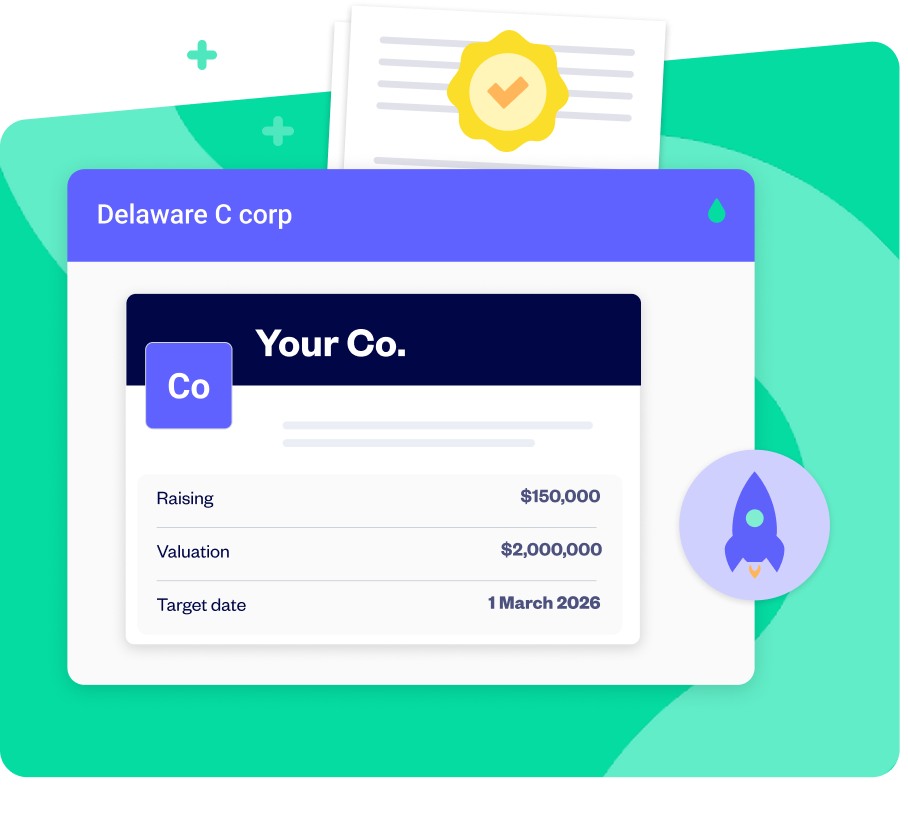
Incorporation is the process of creating a company as a separate legal entity.
Once incorporated, your company becomes legally distinct from you as the founder. That means the business can:
Most importantly, incorporation provides limited liability.
This means your personal assets (like your house or savings) are generally protected if the business runs into financial or legal trouble.
For most startups, incorporating early is essential because it allows you to:
Without a proper corporate structure, it’s difficult to do any of these things cleanly.
When you incorporate your company, you’re not just filling out a form—you’re creating a legal structure with defined ownership and governance.
At a high level, incorporation does three key things:
From that point on, decisions aren’t made informally. They’re made through board approvals and documented actions.
This is what investors expect to see when they review your company.
When incorporating a company in the US, founders typically choose between two main structures:
Both structures offer limited liability, but they work very differently—especially when it comes to fundraising and equity.
An LLC is a flexible business structure often used by:
LLCs are relatively simple to set up and often have favorable tax treatment because profits pass directly to the owners.
However, LLCs usually aren’t the best structure for venture-backed startups.
That’s because:
venture capital funds typically can’t invest in LLCs
A C-Corporation is the standard structure used by venture-backed startups. Companies like Stripe, Airbnb, and Coinbase all started as Delaware C-Corps.
C-Corps make it easy to:
They also allow investors to benefit from tax incentives designed to encourage startup investment.
For these reasons, most high-growth startups incorporate as a Delaware C-Corp from the start. Investors expect it, lawyers are familiar with it, and it creates the cleanest structure for scaling your company.
 Anthony Rose
If you’re planning to raise investment, your company structure isn’t really optional. Investors expect a Delaware C-Corp because it gives them a clean, standard way to invest. Anything else just adds friction.
Co-founder & CEO,
An S-Corporation isn’t technically a different type of company—it’s a tax election that a company can apply for with the IRS.
If eligible, the company’s profits and losses pass through to the shareholders’ personal tax returns, rather than being taxed at the corporate level.
S-Corps are commonly used by:
However, there are some important restrictions. To qualify as an S-Corp, a company must:
Because of these limitations, S-Corps aren’t suitable for most startups planning to raise investment.
They don’t allow preferred shares, and the ownership restrictions don’t work for venture capital or institutional investors.
For startups aiming to scale and raise funding, a Delaware C-Corp is still the better choice.
Learn more: Should I incorporate as an LLC, C corp or S corp?
Delaware has become the standard for startups for several reasons.
Delaware has a specialised business court called the Court of Chancery. It handles corporate disputes and has built up decades of case law, making outcomes more predictable.
Most venture capital firms prefer investing in Delaware C-Corps because the legal structure is well understood. Choosing Delaware removes friction during fundraising.
Delaware corporate law makes it easier to structure boards, share classes, and investor rights in ways that work for startups.
Delaware is known for its fast and efficient filing system, which makes incorporation quick and straightforward.
For these reasons, Delaware has become the default home for startup corporations.
Here are the main steps you need to follow to incorporate your startup in the USA.
The first step is choosing a unique company name.
Your company name must:
It’s also worth checking:
Choosing the right name early helps avoid rebranding later.
The Certificate of Incorporation is the document that officially creates your company.
It’s filed with the Delaware Division of Corporations and typically includes:
Once the state approves the filing, your company legally exists.
Every Delaware corporation must appoint a registered agent with a physical address in the state.
The registered agent receives official correspondence on behalf of your company, including:
Most startups use a professional registered agent service.
Your company’s bylaws define how the corporation will be governed.
They typically set out:
Bylaws aren’t filed publicly, but they’re an essential part of your corporate records.
Once the company exists, it needs to issue shares to the founders. This is where your startup’s ownership structure is created.
Founders usually:
Getting this right early is important because investors will look closely at your cap table when you raise funding.
When you incorporate, you’ll define the total number of shares your company is allowed to create (authorized shares). But you don’t issue all of them straight away.
Instead:
Keeping a large number of shares unissued gives you flexibility to:
Anthony RoseOne of the most common misconceptions is that all shares are issued at incorporation. In reality, you’re creating a pool for future growth. That flexibility is what allows startups to raise funding and hire teams without restructuring.
Co-founder & CEO,
A stock purchase agreement is a legal document that sets out the terms on which founders (or investors) buy shares in a company. It covers details like how many shares are issued, the price, and any conditions such as vesting.
A vesting schedule sets out how a founder or team member earns their shares over time, rather than owning them all upfront. It’s designed to ensure equity is earned through continued contribution to the company.
Founder vesting protects the company if a founder leaves early. Without vesting, a departing founder could walk away with a large percentage of the company without continuing to contribute.
Anthony RoseVesting isn’t about mistrust between founders, it’s about protecting the company if plans change. It keeps things fair for everyone building the business long-term.
Co-founder & CEO,
A corporation must have a Board of Directors.
Early-stage startups usually start with:
The board is responsible for approving key company decisions, including issuing shares and adopting bylaws.
Once incorporated, there are a few additional steps before you can fully operate.
These typically include:
After these steps, your company is ready to operate and raise funding. But there’s a way easier way to do all this. When you use SeedLegals to incorporate, we take care of everything, fast and seamlessly, so you can free up headspace to focus on other things.
As you can tell from reading the above steps, there can be a fair bit of admin involved, which you don’t need more of when you’re building your business. Incorporating your company can involve weeks of legal work and expensive law firm fees.
But don’t worry, there’s good news! We’ve simplified the entire process, guiding you through it so you can set up your startup correctly from day one.
Here’s how it works:
Everything is created, signed, and stored securely in one place, and our team is there to help if you need guidance along the way, all for just $350.
Get set up the right way, right from the start. Avoid common mistakes and streamline the process.
Many founders begin with an LLC because it’s simple and inexpensive. But once fundraising becomes part of the plan, investors usually expect the company to be a Delaware C-Corp. That’s because C-Corps make it easier to issue stock and structure investment rounds.
If you already have an LLC, you generally have two options:
In many cases, you can convert your existing LLC into a Delaware C-Corp.
This allows:
This is usually the cleanest option if your company has already built a product, signed customers, or created intellectual property.
If your LLC hasn’t done much yet, you might instead create a new Delaware C-Corp and start fresh.
However, if your LLC already owns valuable assets or IP, converting the entity is usually safer to avoid ownership complications later.
Dive deeper
Should you convert your LLC or create a new C Corp?
How to convert your LLC to a C corp
SeedLegals is the only platform that takes you from conversion into fundraising, with best-in-class documents built with lawyers.
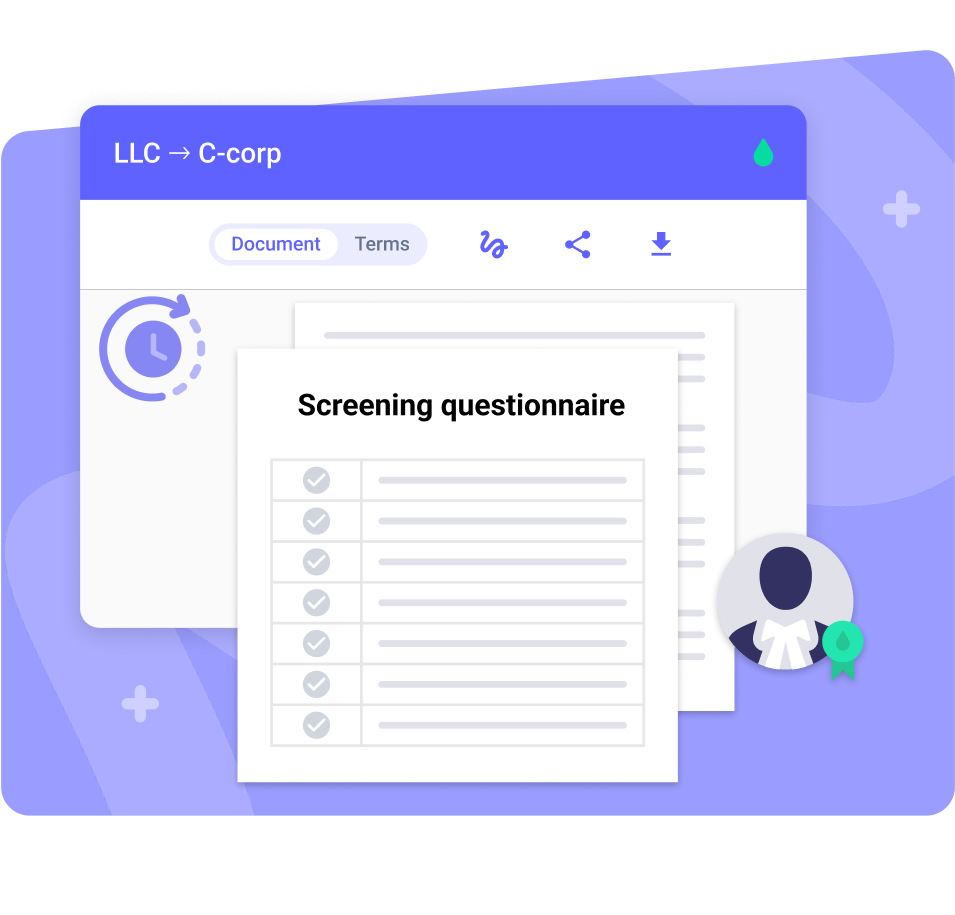
Incorporation sounds simple, but it’s easy to get key details wrong early on. These small mistakes can create bigger issues when you start raising funding or bringing in new team members. They can slow you down and be costly, so make sure you avoid them.
Some of the most common pitfalls include:
These issues can slow down fundraising, raise red flags with investors, or lead to costly legal fixes later.
Getting your setup right from the start gives you a clean foundation to grow—and makes everything from hiring to fundraising much smoother.
After incorporation, it’s important to maintain good corporate hygiene.
This means:
Investors will review all of this during due diligence.
A clean, well-organised company makes fundraising faster and smoother.
Anthony RoseWhen investors run due diligence, they’re not just looking at your product—they’re looking at how your company is set up. Clean documents and a clear cap table can make the difference between a smooth raise and weeks of delays.
Co-founder & CEO,
Incorporating your startup is one of the most important early decisions you’ll make.
For most founders planning to scale or raise investment, the best structure is usually a Delaware C-Corp.
It’s the structure investors expect, it supports issuing equity, and it creates a clean foundation for growth.
The good news is that incorporation doesn’t need to be complicated. In fact, we’ll help you get it done in under an hour with the click of a button. Get started here, or book a free call with our team below if you want to chat about it first.
Bring all your questions - we’ve got the answers! We’ll match you with the right specialist.

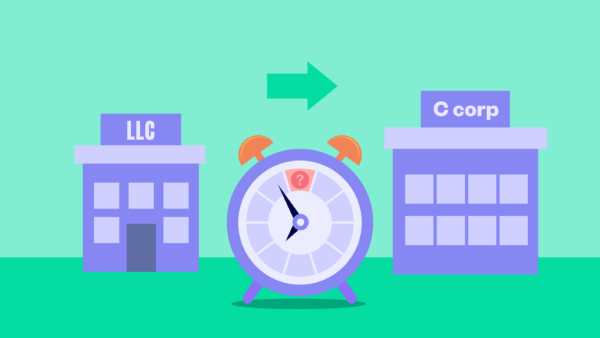
Not sure whether to flip from LLC to C corp? Learn the key triggers,the risks of moving too early or late, and how to ge...

Eni Maj, co-founder of Travel Spoken, shares how the platform is turning travel content into bookable trips using AI – a...


SAFEs Are Not Safe — And Why SAFER Fixes Them For years, the Simple Agreement for Future Equity (SAFE) has been the def...