









How to spot the right moment to flip from LLC to C corp
Not sure whether to flip from LLC to C corp? Learn the key triggers,the risks of moving too early or late, and how to ge...


Already have an account? Log in
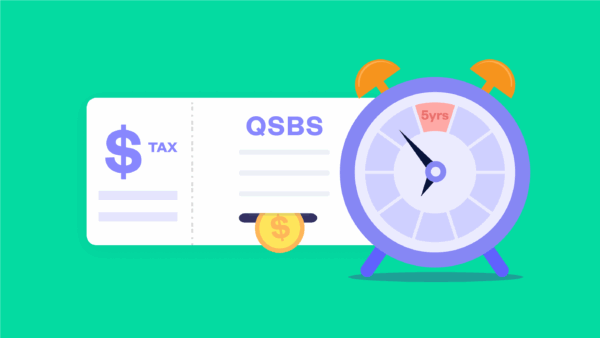
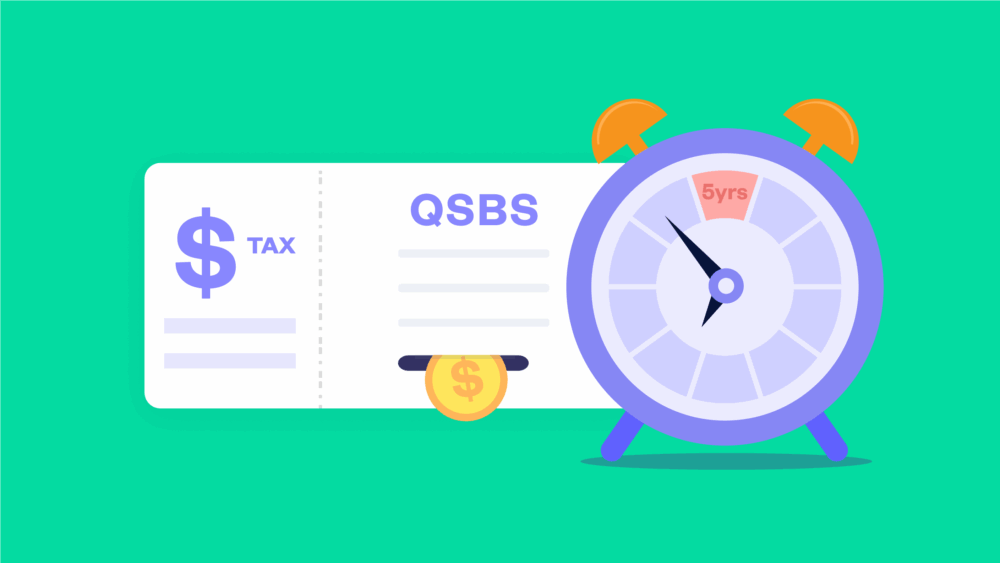
You might have heard about Qualified Small Business Stock (QSBS) – it’s a tax break that can make up to $15 million of your startup exit gains (or, if it’s higher, 10x your original investment amount) completely tax-free under Section 1202 of the Internal Revenue Code.
But there’s a catch: you only qualify for the full QSBS exemption if you’ve held the stock for at least 5 years. For stock issued after July 4, 2025, partial QSBS tax exclusions may be available after 3 or 4 years.
So what happens if your company exits before 5 years – or if your gain is more than $15 million?
That’s where Section 1045 (also known as the ‘QSBS rollover’) comes in.
It’s an easy-to-miss option that lets you delay paying capital gains tax and preserve your QSBS eligibility, even if you haven’t hit the 5-year mark or you’re way above the exemption limit.
In this article, we’ll explain how 1045 rollovers work, who qualifies, and how founders and investors can use them to save millions.
If you hold a QSBS investment in a company, Section 1045 allows you to delay paying capital gains tax when you sell QSBS – as long as you reinvest the sale proceeds into another QSBS investment within 60 days.
By doing this, you’re effectively rolling over the gain from selling one QSBS investment into another. The new QSBS investment will continue the original holding period, plus you’ll avoid triggering an immediate tax bill from the first sale.
This lets you stay on track to claim QSBS tax benefits in the future.
Let’s look at an example:
Say Taylor invested $300k into Startup A, a QSBS-qualified company. After three years, she sells her shares for $3 million, but she hasn’t hit the 5-year mark yet so she doesn’t qualify for the QSBS exemption.
Instead of paying capital gains tax now, Taylor rolls the full $3 million into Startup B (also QSBS-qualified) within 60 days.
Startup B exits a few years later. Because Taylor met the 5-year holding period across both investments, she now qualifies for the QSBS exemption and could pay no tax on the full gain.
You qualify for a 1045 rollover if you meet the following requirements:
Even if you’ve already used your $15 million QSBS exemption, Section 1045 lets you keep deferring gains – and potentially multiply your tax-free upside.
We’ll go over how that works in the next section.
One of the biggest misconceptions is that the QSBS benefit maxes out at $15 million.
That’s only partially true; it’s actually $15 million per company. If you roll gains into new QSBS investments, each of those new companies gets its own $15 million exclusion cap.
Do this multiple times – across different startups – and you could end up with $30 million, $50 million or more in tax-free gains over time.
Let’s go through an example to show how this works:
Say Alex invested $500k in Startup X. Five years later, he sells for $15.5 million and uses the $15 million QSBS exemption. So he pays no tax on that first $15 million.
Rather than pay tax on the extra $500k, Alex rolls it into Startup Y (also QSBS-qualified) within 60 days.
Years later, Startup Y exits for $17 million. That triggers a new $15 million exemption and Alex only pays tax on $2 million, not $17 million.
By rolling gains into new startups, Alex can stack multiple $15 million caps and keep deferring tax in the meantime.
In reality, most founders or investors won’t have a new startup lined up and ready to go within 60 days of selling their stock.
But there are companies (like QSBSrollover) that exist to solve this problem. They help founders and investors roll their gains into QSBS-qualified startups to protect their eligibility.
If you don’t want to lose your QSBS benefit and don’t have another startup in mind, these platforms can be a useful option.
Yes, you can roll over just part of the gain. But you’ll only defer tax on the amount you reinvest and you’ll pay tax on the rest.
It’s a good way to get some cash out now while still keeping the QSBS benefits on what you roll over.
Yes, you can split the proceeds from one QSBS sale into two or more new QSBS-qualified investments, as long as:
Not directly.
QSBS only applies to ‘stock’, so if you reinvest into a SAFE or convertible note, that doesn’t automatically count for rollover purposes.
There’s some debate around SAFEs. While some SAFEs (like Y Combinator’s) are designed to be treated as stock, the IRS hasn’t clearly confirmed that.
To stay on the safe side, you should receive equity to make sure your rollover qualifies under Section 1045.
In theory, yes but it’s complex.
You’ll need to:
The company must be set up to run a real, operating business, not just as a shell for tax planning.
If you plan to do this, it’s best to get guidance from a tax expert to avoid scrutiny from the IRS.
Yes, if those shares were QSBS-eligible and you held them for more than 6 months, you can use a Section 1045 rollover.
Yes, you need to make a formal Section 1045 election on your tax return for the year you sold the original stock. You’ll also need to keep good records showing both the original and new stock met the QSBS rules.
SeedLegals makes it easy to issue stock, manage your cap table and keep QSBS eligibility on track.
Book a call below or start your 7-day free trial today.
Bring all your questions, we’ve got the answers! We’ll match you with the right specialist.

Not sure whether to flip from LLC to C corp? Learn the key triggers,the risks of moving too early or late, and how to ge...

Eni Maj, co-founder of Travel Spoken, shares how the platform is turning travel content into bookable trips using AI – a...

Learn how to incorporate your startup in the USA with our step-by-step expert guide. Avoid common mistakes and get ready...