









New year, new raise – How to get ahead in 2026
SeedLegals CEO Anthony Rose shares tips on fundraising in 2026 and explains the traps that founders need to avoid.


Already have an account? Log in
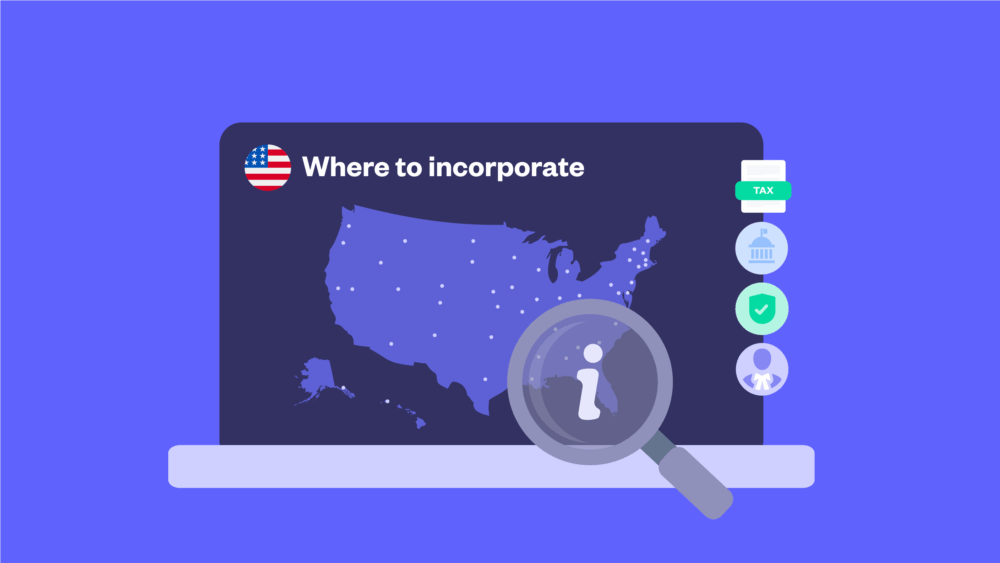
Incorporating your startup is more than just paperwork. It’s a decision that shapes your company’s future. Where you choose to incorporate sets the legal home for your business, which in turn affects your taxes, your reporting requirements and even how appealing you are to investors.
You have a lot of flexibility when it comes to incorporation: you can incorporate in your home state or in another state that offers a more business-friendly environment. But with 50 states to pick from, you need to think carefully as that choice can impact your bottom line, your ability to grow and your chances of raising investment.
Choosing a state sets the rules your company will operate under for years to come. Each state has its own approach to corporate law, tax and compliance. And those differences can add up to real costs or advantages as you grow.
Here are some of the key factors to weigh up:
The right state for your business will depend on your individual needs. But there are a handful of options that are most popular with startup founders. Here’s why:
The most popular choice for high-growth startups. Delaware’s specialist Court of Chancery and extensive corporate law give investors confidence and make disputes more predictable. It’s also flexible when it comes to structuring shares and options. The trade-off is extra costs: an annual franchise tax, higher incorporation fees and, if you operate in another state, registering as a foreign entity.
Texas is often ranked as one of the most business-friendly states. There’s no corporate or individual income tax, though companies pay a modest gross receipts tax. With a large talent pool and big names like Tesla relocating there, Texas has become an attractive option for startups looking to scale.
Attractive for its lack of corporate income tax, personal income tax and franchise tax as well as strong privacy protections. But Nevada’s legal system isn’t as established as Delaware’s, so outcomes are less predictable which is something investors may see as a drawback. You’ll also need to register as a foreign entity if you’re operating in another state.
Like Nevada, Wyoming is low-cost and business-friendly, with no corporate income, personal income or franchise taxes and strong privacy protections. It also allows ‘perpetual existence’, meaning the company continues if an owner leaves. However, it’s not as widely recognized by investors and companies operating elsewhere still need to register in their home state.
Florida is a popular pick for founders thanks to no individual income tax and a relatively low corporate tax. The state has a big customer base, strong job growth and strong international opportunities. Add in tax credits and funding programs, and it’s easy to see why many startups set up here.
For local or smaller businesses, incorporating where you operate can keep things simple. It avoids duplicate filings and ensures you’re governed by local laws. But if fundraising is on your roadmap, investors will usually prefer you to convert into a Delaware C corp.
More than two-thirds of Fortune 500 companies and most VC-backed startups are incorporated in Delaware. The reason is simple: Delaware offers a combination of legal certainty, flexibility and investor trust that no other state matches.
There are three main ways to incorporate your startup in the US. The right one for you depends on your stage, your goals and whether you plan to raise outside investment.
LLCs are the simplest structure to set up. They give you limited liability, pass-through taxation and fewer compliance requirements. That makes them popular with small businesses and solo founders. In fact, most new US businesses start as LLCs.
But they’re not investor-friendly. Venture capital funds, accelerators and many angels won’t invest in LLCs because of the way they’re taxed. If fundraising is in your future, you’ll need to be a C corp.
An S corp is a tax status that lets profits and losses pass through to shareholders, avoiding corporate-level tax. They come with restrictions: no more than 100 shareholders, all must be US individuals and only one class of stock. These limits make S corps rare among high-growth startups. They’re a fit for smaller, profitable businesses, but not for venture-backed companies.
The standard for startups that plan to raise money. A C corp is a separate legal entity that pays corporate tax, but it allows you to issue unlimited shares and multiple share classes (for example, common and preferred stock). This structure makes it easy to bring in investors and set up stock option plans for employees.
Investors overwhelmingly prefer Delaware C corps. They know the legal system, they trust the rules and it makes fundraising much smoother. If you’re planning to scale or seek venture funding, a Delaware C corp is the structure to choose.
Check out our full article on the pros and cons of each company type: Should I incorporate my startup as an LLC, an S corp or a C corp?
Let us know you're looking to make the switch. You'll be the first to know when LLC to Delaware C corp conversion is live.
Incorporation is just the first step. As soon as you start thinking about fundraising, investors will expect more than the right state. They’ll want to see clear share structures, a clean cap table and the right legal documents in place.
That’s where SeedLegals helps. From creating SAFEs to setting up a priced round to managing your cap table, we make it simple to raise on the terms that work for you.
Book a call with our team or get started with your 7-day free trial.
Bring all your questions. We’ve got the answers! We’ll match you with the right specialist.


SeedLegals CEO Anthony Rose shares tips on fundraising in 2026 and explains the traps that founders need to avoid.
Starting a company is exciting – but alongside the challenge of building your business comes the task of keeping on top...


PR can be your secret weapon to accelerate deals. Learn how PR can help early-stage startups and founders secure funding...