








How to spot the right moment to flip from LLC to C corp
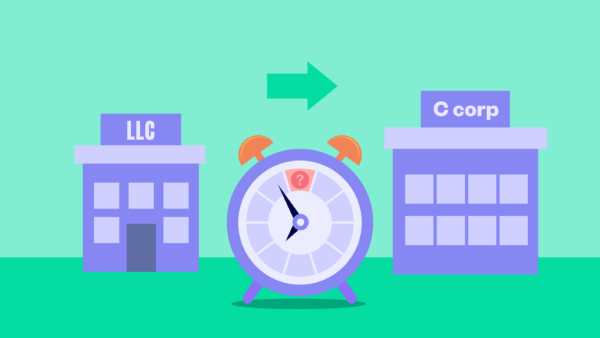
Not sure whether to flip from LLC to C corp? Learn the key triggers,the risks of moving too early or late, and how to ge...


Already have an account? Log in


Valuing your company can be tough, especially when it’s something you’ve poured so much time and energy into. But it’s also key for working out how much money you can raise (without giving away more ownership than you want to).
There’s no single ‘right’ number for an early-stage valuation. Still, data from thousands of funding rounds closed on SeedLegals can give you a clear picture of where your company might sit and, maybe more importantly, how to explain that valuation to investors.
When putting together your pitch deck, you’ll face three big decisions:
These aren’t separate, they’re linked.
The way to think about it is this:
Then you need to ‘reality-check’ it with investors. If they push back, you can adjust either the amount raised or the valuation to keep dilution in range.
Some advisors will tell you to ‘raise as much as you can’, but here’s why that doesn’t work in practice.
Let’s say you tell investors you’re raising $5 million for a pre-seed round. That might sound ambitious, but it also sends a signal about how much you think your company is worth.
Most early-stage investors assume their money will buy around 20% of the company.
If $5 million represents 20%, that means your startup’s post-money valuation would be about $25 million.
For a pre-seed company, that’s usually far too high. It suggests you might be overvaluing your business or misunderstanding how valuations work at your stage.
That’s why ‘raise as much as you can’ isn’t helpful advice. It can make you look unrealistic before the conversation even starts.
A better approach is to plan for 12-18 months of runway. That’s because fundraising itself takes time (often 6 months or more), and you’ll need to show progress before investors back you again.
When setting your funding target, it helps to start with a few key questions:
When you’ve got those answers, map everything out in a simple spreadsheet. Work out your monthly burn (things like salaries, marketing, and development costs) then multiply by the number of months’ runway you want, adding a small buffer for surprises.
At this stage, be careful not to overextend your plan. Some founders start by imagining a full team straight away; say ten people, averaging around $80,000 each. That’s $800,000 per year in salaries alone.
If you then plan for 18 months of runway, your total funding you’ll need jumps to roughly $1.2 million. Add other expenses (like marketing and software) and it’s easy to end up targeting a $1.4 million raise.
At a typical seed-stage dilution of around 15%, that implies a post-money valuation of roughly $9-10 million. This is probably a lot higher than what investors expect for a company at that stage.
That’s why you’ll usually need to scale back your plan unless you can show the traction or investor demand to justify a bigger raise. Start with what you really need to hit your next milestone, not the ideal version of your future team.
Once you’ve set your target raise, check what that means for dilution. At angel and seed stage, founders typically sell 10-20% of the company. That’s the range most investors expect; enough upside if things go well and enough influence if they don’t.
So if your target amount and your dilution comfort zone don’t match up, you’ll need to adjust one or the other. Either raise less, or accept a lower valuation.
Let’s run through an example.
Say you want to raise $1 million and you don’t want to give away more than 15% of the company. To work that out, you divide the amount you’re raising by the percentage you’re willing to dilute. $1 million divided by 15% gives you a $6.67 million post-money valuation.
Then you subtract the $1 million investment, and that means your pre-money valuation is $5.67 million.
Now, imagine investors only think your company’s worth $3 million pre-money. That changes the picture. If you still raise $1 million at that valuation, your post-money becomes $4 million, and $1 million is a quarter of that, so you’ll have to give away 25% of the company.
If you want to stick to 15% dilution instead, you’d need to raise less money. At a $3 million pre-money, keeping dilution at 15% means raising only about $530K.
So the trade-off is simple: Either raise the full $1 million and accept more dilution, or raise less to keep ownership higher.
Traditional fundraising is like getting everyone onto a bus. You spend months lining up investors, negotiating terms, and closing one big round before you can finally drive off. It works, but it’s slower (and typically more expensive).
Agile funding is more like taking cabs. Instead of waiting for the whole bus to fill up, you let investors come in one by one using SAFEs, agreements that let them put in money now in return for shares at your next funding round.
This means less time negotiating and more time building. Investors pre-pay for shares, you don’t have to lock in a valuation too early, and you get the flexibility to raise when opportunities arise.
If you’re weighing up SAFEs versus a traditional priced round, we’ve explained the trade-offs in more detail here.
So far, we’ve looked at valuation from the founder’s perspective. But what about investors? The truth is, there’s no single formula for them either.
Ask three VCs and you’ll probably get three different answers, like:
Some investors lean on spreadsheets, others on stories.
Either way, backing up your valuation with data makes your case far stronger.
Whether you’re figuring out your valuation, deciding how much equity to sell, or planning the right amount to raise, SeedLegals can help you.
Book a call below or start your 7-day free trial today.
Bring all your questions. We’ve got the answers! We’ll match you with the right specialist.

Not sure whether to flip from LLC to C corp? Learn the key triggers,the risks of moving too early or late, and how to ge...

Eni Maj, co-founder of Travel Spoken, shares how the platform is turning travel content into bookable trips using AI – a...

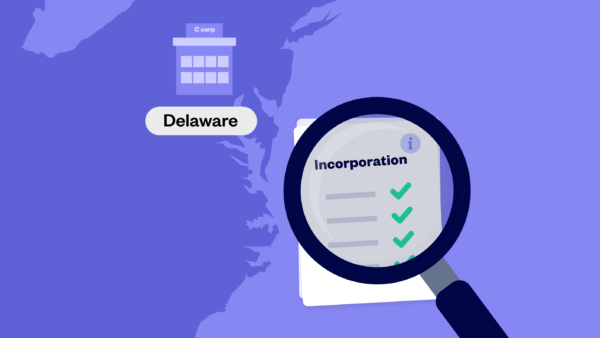
Learn how to incorporate your startup in the USA with our step-by-step expert guide. Avoid common mistakes and get ready...