









How to use PR to secure funding: What investors really want
PR can be your secret weapon to accelerate deals. Learn how PR can help early-stage startups and founders secure funding...


Already have an account? Log in
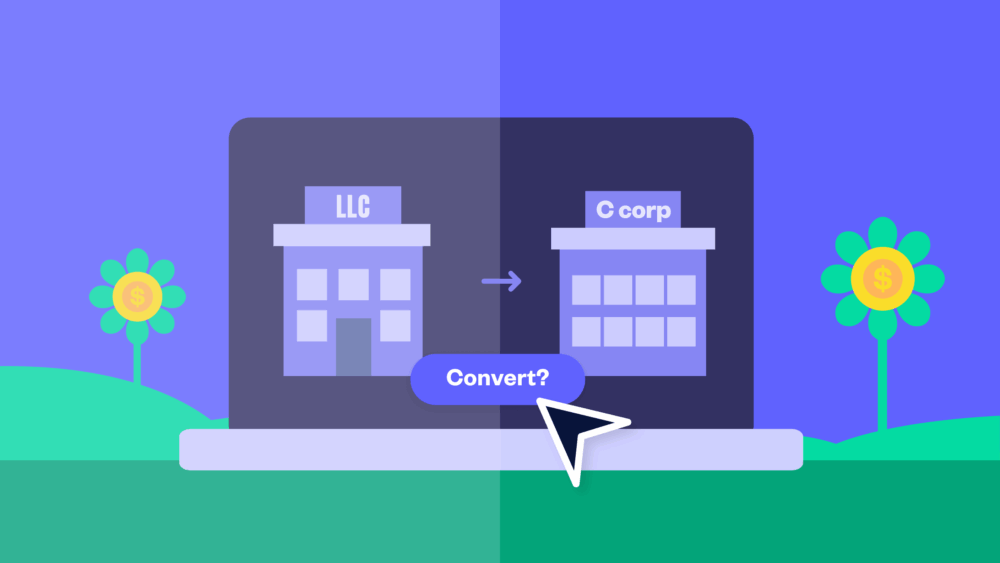
Lots of founders start their business using an LLC. It’s cheap, easy to set up, and has personal tax benefits that can be useful in the early days of running a business.
But if you decide to raise equity investment, you’ll immediately hear one thing: investors typically expect you to be a Delaware C corp.
At this stage, it’s not a question of if you make the switch, but how you do it.
Depending on how much work you’ve already done with your LLC, you may be able to set up a brand-new C corp and start fresh. But most founders will need to convert their existing LLC into a Delaware C corp to avoid all sorts of headaches down the line.
This guide breaks down what you need to know before you make the switch, when forming a new C corp might be fine, and why conversion is the cleaner route for most founders gearing up for investment.
When you’re fundraising, investors want a structure that offers equity, tax advantages and scales with the company. A C corp gives you all this.
There are several reasons why:
C corps make it easy to issue common and preferred stock, which is essential for investors who take equity in return for their capital. LLCs can do equivalents, but it’s much more complex, clunky and VCs and other institutional investors just won’t be interested.
There are also investor tax breaks designed to encourage early-stage investment, that only attach to the issue of C corp stock (such as QSBS and 1244 Loss Relief)
As you grow, you’ll most likely need to issue more equity, offer employees stock options, and bring in new investors. C Ccorps are set up to make this simple.
Most venture funds, accelerators and crowdfunding platforms work with C corps by default. Some funds are even mandated against investing in anything else. Choosing the structure they’re already set up for reduces friction and delays at every stage of your fundraising.
If you originally set up your company as an LLC, you can make the switch to C corp. But you need to be careful to choose the right route based on what work you’ve already done with your LLC.
In practice, there are three options:
This is usually the cleanest, safest option:
If your LLC has done anything meaningful work — built a product, created IP, signed customers or brought on co-founders — this is the route to take. It avoids anyone being able to claim the LLC has rights to the IP in your new C corp. It also leaves a clean audit trail and one less thing for your investors to nitpick over.
This is essentially a ‘fresh start’:
In practice, this only really works when the LLC has almost no activity, meaning you’ve:
Some states don’t support a straightforward LLC to C corp conversion.
If you’re in one of those states, the alternative approach is a statutory merger:
It’s a more complex process than a standard conversion and isn’t currently supported in the SeedLegals workflow. But the principle is the same: you’re bringing everything into one company, not leaving the LLC behind.
Founders often wonder whether they can skip converting and simply set up a brand-new Delaware C corp instead. If your LLC has done any real work, you’ll need to convert it, not abandon it.
Here are some of the circumstances where conversion is likely to be the right answer:
Code, designs, branding, customer data, prototypes, even a detailed business plan, once any of these exist, investors will assume the LLC holds rights to it. A new C corp won’t inherit that work, so conversion keeps IP ownership clean.
If more than one person is involved, leaving a dormant LLC raises questions about who owns what. Converting keeps everyone’s existing rights intact and avoids disputes later.
If the LLC has billed customers, taken payments or signed agreements, starting fresh forces you to manually transfer every contract. That’s high-risk and time-consuming. Conversion keeps your trading history in the same entity.
If your LLC is older than a few weeks or months (and you’ve done anything beyond registering it) then conversion is almost always the cleaner, safer route.
In short: if your LLC is more than a dormant entity shell, converting early gives you a clean structure that investors and future team members can rely on.
Converting your LLC used to cost $$$ in legal fees and involve weeks of delays when you need to take investment quickly.
That’s why we’ve built the world’s first automated LLC to C corp conversion. It takes you from LLC to investment-ready C corp, all for just $1,499.
Here’s what you get:
Before anything is converted, we review your existing LLC to understand how complex the conversion will be.
Once that’s done, we move ahead with the conversion.
We handle the conversion process, end to end.
We generate all the documents needed to approve the conversion, including:
We generate all the core conversion and incorporation documents, including:
We file everything with the relevant authorities and cover all filing fees:
Once approved, we upload all final documents to the SeedLegals platform to they’re easy for you to find and manage.
Your Delaware registered agent is set up for you and the cost for the first year is included.
After conversion, we generate all the documents your new C corp needs to operate and raise investment.
This includes:
Once you’ve converted, you’ll have access to the full set of SeedLegals tools: SAFEs, priced rounds, cap table management and all the core documents you need as you grow.
If you’re ready to make the switch, you can start your LLC to C corp conversion today.
Yes. When your LLC becomes a C corp, the IRS treats it as a new entity for tax purposes, so you usually need a new EIN. One key exception is where the LLC has already elected to be taxed as a C Corp. No change in tax status will occur here because the forms will be taxed in the same way both before and after conversion. Other exceptions to the need for a new EIN are uncommon.
In most cases, yes. A new EIN often triggers your bank to require a new account for the C corp. It’s worth checking with your bank before you start so you can plan for a smooth transition.
Yes. SeedLegals works with its own registered agent as part of the conversion workflow, so your existing one will be replaced when you switch to a Delaware C corp.
Yes. Our process is based on unanimous consent from all LLC members. You’ll need their agreement before you start, otherwise the conversion can’t go ahead on the SeedLegals platform.
Some states allow for majority consent, so if you can’t get 100% approval from your members, we can refer you to our partner law firm to see if they can assist.
You can recreate vesting schedules or issue new grants once you’re a C corp. The conversion itself doesn’t handle advisor or team equity, but you can set everything up afterwards using SeedLegals.
You’ll generally need to close out the LLC’s activity and then begin reporting as a C corp from the date of conversion. The specifics depend on your situation and how your LLC was taxed, so you’ll need to confirm this with your tax adviser.
There are several documents and records we’ll need you to provide to complete the conversion:
Yes. Your accountant will need to let us know about your tax affairs as part of the conversion. It’s worth looking into this sooner rather than later to avoid delays.
Bring all your questions. We’ve got the answers! We’ll match you with the right specialist.


PR can be your secret weapon to accelerate deals. Learn how PR can help early-stage startups and founders secure funding...

Learn how the right public relations strategy can open doors, boost recognition and even secure funding, along with comm...

Set your startup's valuation confidently. Get clarity on your startup's valuation and how much to raise with data-backed...