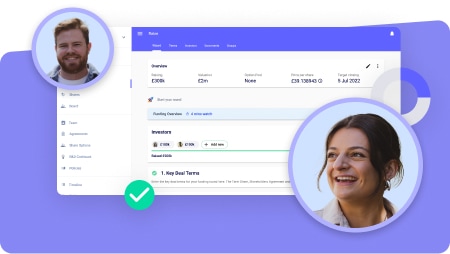









How to Incorporate a Startup: Step-by-Step Guide to Form a Delaware C-Corp
Learn how to incorporate your startup in the USA with our step-by-step expert guide. Avoid common mistakes and get ready...


Already have an account? Log in


AI agents are quickly becoming one of the most powerful tools available for marketing outreach, personal assistants, and more. Tools like OpenClaw can automate tasks, connect APIs, and dramatically speed up workflows – from coding to research to operations.
But with great power comes a new set of risks. When AI agents are able to run commands, access data, and integrate with multiple services, it’s essential to use them safely and responsibly.
So I got together with OpenClaw expert Gus Spathis from Xogito to discuss agentic AI tools like OpenClaw and how to use them safely.
Here’s the recording of our webinar, followed by a summary of the key takeaways, along with practical tips for safely experimenting with OpenClaw and other AI agents.
OpenClaw is an AI-powered developer agent designed to automate workflows and interact with AI models such as Anthropic’s Claude.
Instead of simply asking a chatbot questions, tools like OpenClaw can:
Execute tasks across tools
Call APIs
Assist with development workflows
Automate repetitive work
Coordinate multiple AI prompts and outputs
This makes them far more powerful than a traditional chatbot, but also means they should be used carefully.
AI agents often have access to sensitive systems such as:
Source code repositories
Internal documentation
Cloud infrastructure
API keys
Customer data
If configured incorrectly, an AI agent could:
Leak sensitive information
Execute unintended commands
Access data it shouldn’t
Introduce security vulnerabilities
For startups moving quickly, the temptation is to experiment freely. But a few simple safeguards can make a big difference.
Avoid giving agents full admin access to systems like:
AWS
GitHub
Databases
Payment systems
Instead, create restricted API keys and limited permissions specifically for AI tooling.
Think of AI agents like junior developers: powerful, but they shouldn’t have unrestricted access.
Before connecting an AI agent to production systems:
Test it in a staging environment
Use dummy datasets
Limit write permissions
This lets you experiment safely without risking live infrastructure.
Many AI tools require access to services like Claude or other APIs.
Best practices include:
Store keys in environment variables
Use secret managers (e.g., AWS Secrets Manager)
Rotate keys regularly
Avoid embedding keys directly in prompts or code
Never paste sensitive credentials directly into AI chat interfaces.
Agents that run commands should have logging enabled.
You should be able to see:
What prompts are executed
What commands run
Which APIs are called
What data is accessed
If something goes wrong, logs are essential for diagnosing issues.
Avoid connecting AI agents to large internal knowledge bases without safeguards.
Instead:
Provide scoped data access
Redact sensitive information
Use retrieval layers that filter documents
Remember: anything the AI agent can read could potentially be surfaced in outputs.
Even powerful AI models can hallucinate or make mistakes.
Before letting an agent automatically execute actions such as:
Deploying code
Sending emails
Updating infrastructure
Make sure a human approves the action.
A human-in-the-loop model is still best practice.
One interesting issue discussed during the conversation was naming conflicts with AI platforms.
For example, some projects originally named after specific AI models had to be renamed due to trademark concerns.
If you’re building AI tools on top of third-party models:
Avoid using their brand in your product name
Review their developer policies
Check trademark guidelines
This helps avoid legal complications later.
AI agents like OpenClaw represent a new layer of the AI ecosystem.
While large companies build foundation models, startups are increasingly building:
Developer agents
Workflow automation tools
AI-powered copilots
Vertical AI applications
For founders, the opportunity is enormous, but success will depend on building tools that are secure, reliable, and trusted by users.
AI agents like OpenClaw are opening a new chapter in software development. They can automate work, accelerate experimentation, and unlock powerful new capabilities for startups.
But as with any powerful technology, the key is using it responsibly.
By following a few simple principles – limited permissions, strong logging, secure key management, and human oversight – founders can safely explore the potential of AI agents while protecting their systems and data.
The startups that master this balance will be the ones best positioned to build the next generation of AI-powered products.
Bring all your questions - we’ve got the answers! We’ll match you with the right specialist.

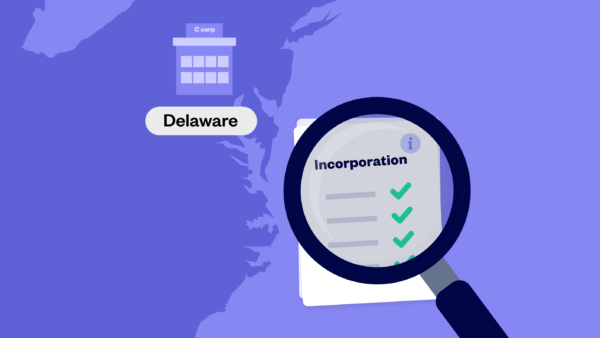
Learn how to incorporate your startup in the USA with our step-by-step expert guide. Avoid common mistakes and get ready...

SAFEs Are Not Safe — And Why SAFER Fixes Them For years, the Simple Agreement for Future Equity (SAFE) has been the def...

SeedLegals CEO Anthony Rose shares tips on fundraising in 2026 and explains the traps that founders need to avoid.