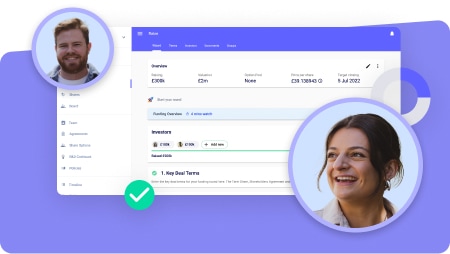











Equity Dilution Calculator: Model Startup Dilution Before Your Next Raise
Model your SAFE stack and see your exact founder dilution before your next round. Free equity dilution calculator. Stack...


Already have an account? Log in


Incorporating should be straightforward. But small missteps early on can lead to expensive fixes later, from surprise tax bills to delays in fundraising. Let’s walk through some of the most common mistakes founders make and how to avoid them.
Founders often incorporate where they live or where it’s cheapest instead of choosing the structure investors typically expect: Delaware.
Delaware is the standard for venture-backed startups because:
People think, “I operate in California, so I should incorporate in California.” But many startups still incorporate in Delaware and simply foreign qualify in their operating state later. For lifestyle businesses, local incorporation can be fine. For venture-backed startups, Delaware is usually the default expectation.
Many founders are surprised by their first Delaware franchise tax bill.
Every Delaware C corp has to pay an annual franchise tax, but what catches people out is that Delaware offers different ways to calculate it. If you don’t actively choose the right method, you could end up paying far more than necessary.
This often affects startups that authorize a large number of shares at incorporation. While issuing millions of shares is common and usually the right approach for startups, it can lead to unexpectedly high franchise tax bills if the wrong calculation method is used.
In some cases, founders have received bills running into tens of thousands of dollars when a much lower amount may have been available under a different calculation method.
Things change. Co-founders leave. Priorities shift.
Without vesting, a founder who leaves early could walk away with a large percentage of the company after contributing very little.
That’s a difficult position for the remaining team and a red flag for investors.
Founder vesting solves this by ensuring equity is earned over time, usually across four years with a one-year cliff.
Setting this up early also matters for tax reasons.
If your founder shares reverse vest over time, you’ll usually want to file an 83(b) election within 30 days of receiving the stock.
For example, paying tax when shares are worth a few cents each is very different from paying tax years later when they may be worth dollars, or much more.
Miss the 30-day filing window and you generally can’t fix it later. Those tax benefits can be lost.
That’s why vesting is something to put in place from day one, not something to revisit after fundraising starts.
Key lesson: Set up founder vesting properly from day one, document everything clearly, and don’t overlook your 83(b) election. Small setup decisions early on can have huge ownership and tax consequences later.
Read more: Founder vesting: reasons why it’s important
Many founders start as an LLC before switching to a Delaware C-Corp for fundraising.
One common mistake is setting up a brand-new C-Corp without properly transferring the LLC’s assets, IP and operations across.
It can feel quicker in the short term, but it often creates bigger problems later.
For example:
There can also be tax consequences if assets are transferred incorrectly or assigned below fair market value. In many cases, a statutory conversion is the cleaner route because it’s generally treated as tax-neutral when properly structured and preserves continuity between entities. The key is to treat the transition as a full legal and operational conversion, not just a new filing.
 Anthony Rose
A statutory conversion is the easiest way to avoid serious headaches when you least want to have them. Getting things wrong can jeopardize investor interest and cost tens of thousands to fix retrospectively. We’ve made this process quick, cheap and intuitive to help you avoid that sort of mess.
Co-founder & CEO,
From conversion, staright into fundraising in just a few clicks. With best-in-class documents and a team to support you every step of the way.

When you incorporate a Delaware C-Corp, you’ll choose how many shares your company is authorized to issue. A common startup setup is authorizing 10 million shares, but how you allocate and manage those shares is important.
One mistake founders make is issuing all authorized shares immediately to founders without thinking ahead to future hires, advisors or equity incentives.
While you can increase authorized share capital later by filing a Certificate of Amendment in Delaware, doing this repeatedly creates additional legal admin, filing fees and board/shareholder approvals.
Instead, think carefully about your long-term equity structure from day one. Understand how much you’re setting aside for employee equity plans, investors and advisors.
You’ll also want to make sure all stock issuances are properly documented and approved. Mistakes in corporate formalities can create issues during fundraising and due diligence later. If you’re unsure how to structure founder equity, employee option pools or future fundraising allocations, it’s worth getting advice early.
Read more:
Don’t make these mistakes ☝️ We’ll help you get it right from day 1. Book a call, we’ll talk you through it and answer your questions.
Bring all your questions - we’ve got the answers! We’ll match you with the right specialist.

Model your SAFE stack and see your exact founder dilution before your next round. Free equity dilution calculator. Stack...

Should you convert your LLC or form a new C corp? This guide explains when conversion is a must and how to get investor-...


PR can be your secret weapon to accelerate deals. Learn how PR can help early-stage startups and founders secure funding...